
Glassine vs. PET Release Liner: How to Choose the Right Backing for Labels
Have you ever run into unexpected material breaks or liner tears during high-speed labeling jobs? While the face material sets the visual look of your packaging, liner performance directly affects how smoothly your production line runs. In the self-adhesive label industry, Glassine and PET release liner are the two main liner options. A clear understanding of their respective advantages in tensile strength, transparency, and die-cut tolerances is critical for better processing and labeling efficiency.
This guide explains the difference between the Glassine liner and the clear PET liner in terms of physical characteristics, application benefits, and cost factors. It will help you select the best liner for your labeling operations.
What is a Glassine Release Liner?
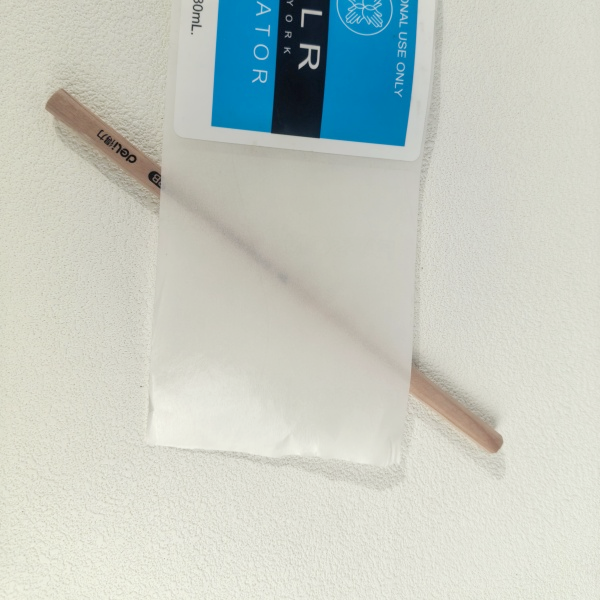
This paper goes through special treatment to create a dense, glass-like smooth surface with a semi-transparent sheen. A silicone release agent is then coated on its surface. This coating makes the paper stronger, and resistant to moisture and oil. After these two steps, Glassine paper can provide good anti-sticking effect on most common label adhesives.
Key Characteristics:
Great die-cutting performance: Glassine paper has a compact texture and an extremely flat surface. During rotary or flat‑bed die cutting, cutting tools wear less. It delivers clean cut edges without chipped edges or excess paper dust. Waste stripping runs smoothly and consistently.
Good for high-speed automated production: Glassine paper offers good stiffness and tensile strength. It resists breakage and deformation when running on high-speed automatic machines, especially rotary labeling machines. Its evenly coated silicone surface keeps consistent release force. Labels peel off cleanly at high speeds with no sticking.
Reliable protection and stability: Glassine paper provides decent moisture and oil resistance. It handles labeling work at moderate temperature ranges. It protects the adhesive layer from outside contamination and penetration, and preserves the label’s long-term stickiness.
What is a PET Release Liner?
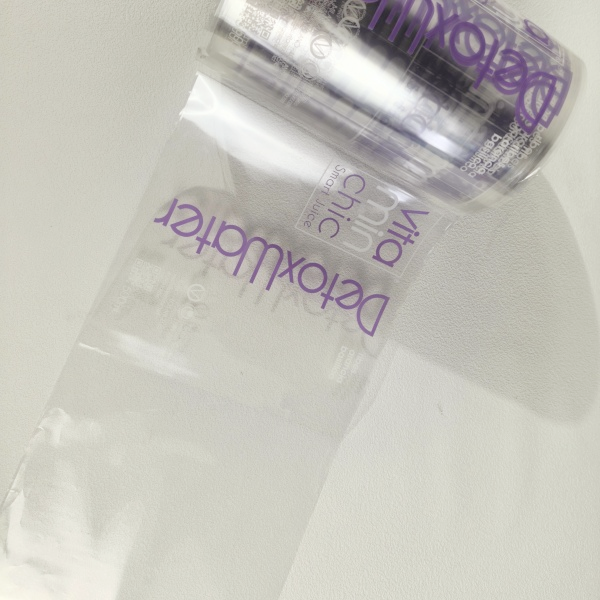
PET release liner is a functional film made from PET base film with an even layer of silicone coated on its surface. The coating on the back side of the release liner has a low surface energy to prevent adhesion of the back side of the adhesive to the liner. The labels can then be easily removed from the roll during storage and processing.
Compared with Glassine release paper, PET release liner has unique physical properties. Its base film delivers strong mechanical performance, tight thickness tolerance, high-temperature resistance, and very low heat shrinkage. In addition, PET release liner is thinner than paper-based release materials. For the same roll diameter, more labels or tapes can fit onto one roll. This reduces roll change frequency and cuts storage and shipping costs. It also resists breaking on high‑speed automated equipment, making it ideal for high‑speed automatic machines and wet-use applications.
Key Characteristics:
Precise die-cutting and high cleanliness: PET release liner has a smooth surface. It is fully transparent with good light transmission. During precision die-cutting, it produces clean cutting edges. It also meets strict anti-static, scratch-resistance and dust-free requirements for optical and electronics industries.
Suitable for high-speed automated production: PET release liner features very high tensile strength and tight thickness tolerance. It resists breakage and deformation while running on high-speed automated equipment. Its stable silicone coating allows flexible custom release force. This ensures smooth peeling without adhesive residue during high-speed laminating and die-cutting.
Superior weather resistance and dimensional stability: PET release liner offers great resistance to high and low temperatures, chemicals and oil. It also has very low heat shrinkage. It maintains consistent size and performance in tough industrial
Glassine vs. PET Release Liner:What’s the difference
Glassine vs. PET Release Liner: Side-by-Side Comparison
| Feature / Metric | Glassine Liner | PET Release Liner |
|---|---|---|
| Material Composition | Supercalendered wood pulp paper | Synthetic polyester (PET) film |
| Tensile Strength | High (Paper‑grade) | Exceptional (Virtually tear‑proof) |
| Caliper / Thickness Uniformity | Standard industry tolerance | Ultra‑precise micro‑gauge tolerance |
| Transparency & Clarity | Semi‑translucent | Crystal clear |
| High‑Speed Application | Moderate to High speed | Ultra‑high speed (Prevents web breakage) |
| Humidity / Water Resistance | Moderate | Superior |
| Adhesive Surface Smoothness | Good | Flawless (No orange‑peel effect) |
| Relative Cost | Economical | Premium |
From the descriptions above of the two liner types, you can see they share many similar core functional properties. Even with this functional overlap, these two liners show major differences in base material, physical performance, production suitability and cost. These fundamental differences define their best-fit use cases.
For most traditional label applications, Glassine release liner is the preferred and cost-effective option. In comparison, PET release liner is made for special and extreme industrial scenarios that demand higher performance.
Appearance and Transparency
Glassine liner is semi-transparent with a frosted texture that creates hazy visibility. PET release liner delivers high light transmittance and clear visibility. This makes PET indispensable for precision industrial processes such as electronic die-cutting and optical lamination. In some workflows, workers or vision‑inspection equipment need precise micro-positioning to view patterns, circuits and bonding surfaces through the liner.
Especially for labels with clear face materials used on glass, acrylic or clear plastic packaging, Glassine liner creates a noticeable hazy or frosted visual effect between the label and the liner. Fully‑clear PET release liner solves this problem perfectly. The label shows a clean transparent look before peeling, for better visual presentation.
In addition, automated production and quality inspection often rely on photo sensors and vision cameras to read barcodes, color marks and pattern edges through the liner. The semi-transparent fiber-based texture of Glassine blocks light transmission. This reduces recognition accuracy or causes inspection errors. The PET liner has high light transmittance and low haze, and delivers stable, reliable optical inspection results.
Higher Performance
We recommend PET release liner only when you need better-performing liner material. On high-speed labeling lines running at 300-800 meters per minute, strong mechanical tension from fast operation can easily tear Glassine liner. With high tensile strength, PET film effectively stops web breaks and keeps the production line running steadily.
If labels will be used in harsh conditions above 150°C, high humidity, chemical solvents, or cold-chain low-temperature environments, PET film delivers excellent stability, water-proof, moisture-proof and weather-resistant properties to fit these extreme working conditions. For extra-thin, stretch-prone face materials such as PE and PP, PET film provides far better support than paper-based Glassine liner. It effectively prevents label deformation and curling.
Besides, PET film is thinner. Rolls with the same outer diameter can hold more labels. This cuts roll-change frequency on production lines, improves working efficiency, and lowers storage and shipping costs.
Cost Considerations
In terms of cost, Glassine liner uses simpler raw materials and production processes. Its overall purchase price is much lower than PET release liner, making it a highly cost‑effective standard liner material.
Even though a PET roll of the same diameter holds more labels and saves roll‑changing and logistics costs, PET has a noticeably higher cost per square meter. Its total operating cost is still far above Glassine paper.
Therefore, for most general‑purpose packaging, standard labeling, and normal‑temperature working conditions, we recommend Glassine liner first. Its performance fully meets daily label printing and automated labeling requirements. It keeps product quality consistent while helping you control production costs as much as possible.Use PET release liner only when your project actually needs it. There is no need to replace Glassine liner blindly.
FAQ
What is the main difference between Glassine liner and PET release liner?
When should I choose PET release liner instead of Glassine liner?
Can Glassine liner work for high‑speed automatic labeling machines?
How does liner transparency affect automated vision inspection for labels?
Does PET release liner lower total production costs for label rolls?
What risks appear when using Glassine liner in harsh industrial environments?

Need Help Customizing Your Own Packaging Design?
Whether you need Cosmetic Labels, Wine Labels, Food Labels, or Custom Adhesive Stickers, our experts can recommend the best material based on your product, application, and budget.