
How to Choose the Right Roll Labels for Your Packaging Line
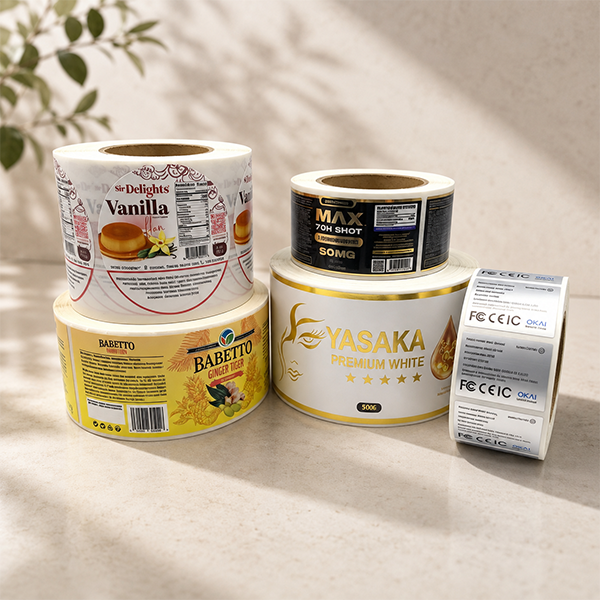
Roll labels supplied in continuous rolls,can be applied using manual applicators or by automated labeling machines.They are commonly used for labeling packaging in the food&beverage ,cosmetics ,household ,chemicals and industrial markets.
To ensure that your packaging line is running optimally, you need to select the right roll labels.There are a number of key factors to consider when choosing labels, including the label material,adhesive type,size,roll direction and machine compatibility.The wrong specifications may lead to label application issues, production downtime, and reduced packaging efficiency.
This guide explains how to choose the best roll labels for your packaging process, covering material selection, label dimensions, adhesive options, printing methods, and key specifications required for automatic labeling machines.
What Are Roll Labels?

Roll labels are pressure-sensitive labels supplied on continuous rolls for manual or automatic labeling. Each label is separated by a small space and wound around a cardboard core, allowing labeling equipment to continuously feed, peel, and apply labels.
Ideal for printing variable information such as product model, manufacturing date, batch number, and barcode in rolls.
Labels can be printed in various shapes, such as rectangles and circles, and use a variety of face materials including coated paper, PET, PVC, and synthetic paper, with glassine backing paper.
They differ from sheet labels in that they are better suited for high-volume packaging and use with automated labeling systems. They help maintain consistent label placement while reducing manual handling and improving production efficiency.
Why Choose Roll Labels for Packaging Lines?


High-Speed Automated Labeling Performance
Roll labels paired with automatic labeling machines can transform the labeling process from one that requires frequent manual intervention into a high-speed, continuous, and automated process.
Improve Labeling Efficiency
The labels are mounted on the machine in roll form, allowing the machine to continuously extract, peel, and paste them, eliminating the need for manual insertion of individual labels as required by single labels.
Increase Packaging Speed
Modern automatic labeling machines are extremely fast, capable of labeling dozens to hundreds of products per minute, depending on the product shape and label size—a speed unattainable by manual labeling.
Maintain Consistent Label Placement
Through sensors, they automatically detect label spacing or the black mark on the backing paper, ensuring precise label placement each time. This avoids common problems with manual labeling, such as skewing, bubbles, and inaccurate positioning, reducing rework caused by poor labeling.
Reduce Human Intervention
Typically a labeling machine is operated by one person, and often by nobody at all, as opposed to the number of labeling workers that would be required otherwise. Furthermore, a roll of labels usually contains thousands or even tens of thousands of labels, significantly reducing the frequency of label material changes compared to single labels, allowing the production line to operate for longer periods.
Compatibility of Roll Labels with Automated Equipment
Different packaging production lines have specific requirements for label specifications. Incorrect label size or winding direction may cause feeding problems. Before ordering labels, buyers must pay attention to these points to avoid subsequent incompatibility.
Core Size
The label roll core refers to the hollow paper tube at the center of the label roll that supports the label material. The core size is the inner diameter of the paper tube, which is the diameter of the central hole. Common label roll inner diameters include 1 inch, 1.5 inches, and 3 inches; different sizes determine whether the label roll can be smoothly inserted into the printer. For more detailed information on how to measure the core, please read this article—How to Choose the Label Roll Core Size for Your Printer
Roll Diameter
There is no uniform standard for the outer diameter of roll labels; it mainly depends on the specific application and the equipment used. Within the capacity of the labeling machine’s label magazine, the label diameter should be maximized as much as possible.
This significantly reduces the number of roll changes and avoids frequent downtime that could disrupt production. Common standard outer diameters include 9.5 inches, 10 inches, and 10.8 inches, with some purchasing guides mentioning a maximum standard roll outer diameter of 10 inches.
Label Gap
Automatic labeling machines have millimeter-level strict requirements for label length, spacing, and reset hole position.The label spacing and the light transmittance of the backing paper directly affect sensor recognition. Dimensional deviations can lead to sensor misjudgments, resulting in missed labels, continuous labeling, or misaligned labeling.
It is also necessary to clarify whether the label layout is horizontal or vertical, and whether the spacing between labels matches the equipment’s detection method.
Winding Direction
The label ejection direction refers to the direction in which the label is pulled out of the roll. It is usually based on the label file being upright and is categorized into
- top ejection
- bottom ejection
- left ejection
- right ejection
Incorrect ejection direction will prevent the label from being properly peeled off and applied, directly rendering the entire roll unusable. The label ejection direction and the number of labels per roll must be clearly defined to ensure complete consistency with the labeling machine’s paper feed path.
Choose the Right Label Roll Material
Matching your application needs with automated dispenser compatibility to maximize line speed and packaging durability.
White BOPP Film
#1 Auto-Dispensing StandardPE Film (Polyethylene)
Best for Squeeze BottlesClear BOPP Film
Elegant No-Label LookMetallic / Silver PET
Premium Shelf AppealSynthetic Paper
Extreme Industrial DutyCoated Art Paper
High-Volume Budget FriendlyFAQ
How do I determine the correct roll wind direction (unwind chart) for my automatic labeling applicator?
Automatic labeling applicators require a specific unwind direction (industry standard positions 1 through 8) depending on how your containers pass through the conveyor belt. Check your applicator’s mechanical manual to verify whether your equipment requires top-first, bottom-first, left-first, or right-first dispensing. Providing the wrong wind direction will cause labels to be applied upside down or misaligned on your packaging line.
Which roll core size and maximum outer diameter (OD) should I select for high-speed production?
For high-speed automated packaging lines, a 76mm (3-inch) core is the industry standard because it supports larger roll diameters (typically 8 to 12 inches OD). Larger outer diameters contain more labels per roll, significantly reducing line downtime caused by frequent roll changes during continuous production runs. Always verify your machine’s maximum allowed outer roll clearance before ordering.
What adhesive and face material combination is best for harsh or cold-chain environments?
For cold-chain, high-moisture, or chemical-exposure applications, opt for synthetic face materials such as BOPP, PE, or PET paired with a permanent acrylic or freezer-grade adhesive. Unlike standard paper labels, synthetic films resist moisture absorption, oil penetration, and thermal tearing, ensuring labels remain firmly attached and scannable throughout transit and storage.
How does liner choice (Glassine vs. PET Liner) impact continuous labeling machine performance?
Glassine backing paper is the standard economical choice for most automated dispensers. However, for ultra-high-speed packaging lines operating at peak speeds, a thin clear PET release liner is recommended. PET liners offer superior tensile strength with near-zero breakage risk under high web tension, eliminating costly line shutdowns caused by liner tearing.
Are clear film labels fully compatible with optical sensors on automatic labeling machines?
Clear film labels (Clear BOPP) require specialized sensing setups. While standard optical gap sensors detect differences in light transmission between opaque labels and backing paper, clear labels require either ultrasonic label sensors or a continuous black registration mark printed on the back of the liner. Always confirm your applicator’s sensor type prior to mass production.
Can I request die-line templates and pre-production roll samples for line testing?
Yes. B2B purchasing requires strict quality validation. We provide custom digital die-line templates for your design team, as well as sample rolls for physical machine testing. Running a test roll on your production line ensures seamless peeling performance, accurate registration sensing, and adhesive compatibility under real factory operating conditions before committing to bulk order volumes.

Need Help Customizing Your Own Packaging Design?
Whether you need Cosmetic Labels, Wine Labels, Food Labels, or Custom Adhesive Stickers, our experts can recommend the best material based on your product, application, and budget.