
What Is the MOQ for Custom Labels? A Complete Guide for First-Time Buyers
MOQ for custom labels depends on various factors such as printing method, label material, label size and label finish. These factors determine the Minimum Order Quantity for labels that a supplier is willing to print. The MOQ helps suppliers to cover fixed costs, ensure sufficient economies of scale and to manage risks associated with production.
Understanding the MOQ can help new product launches and market tests to manage the printing costs, the needed stock, and the required packaging flexibility.
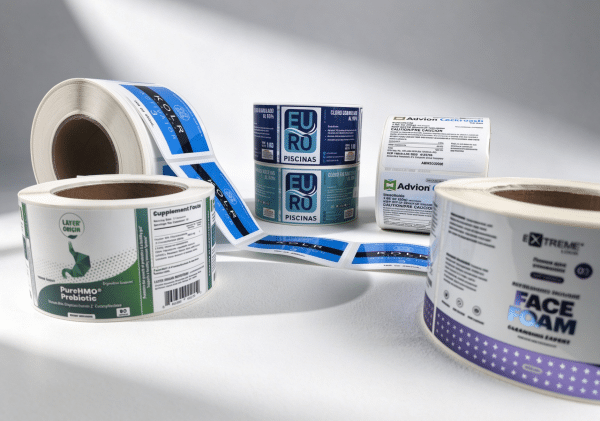
What Does MOQ Mean in Custom Label Printing?
MOQ is the smallest number of labels a printer accepts for one‑time custom production.It applies per unique design in most cases, not your total combined quantity across several different label styles. For example, if your supplier sets a 200‑piece MOQ, you need to order at least 200 units for each separate artwork instead of splitting one batch into 2 or more designs.Generally speaking, the MOQs set by different suppliers for various products differ, primarily depending on the following factors.
Production Cost and Manufacturing Complexity
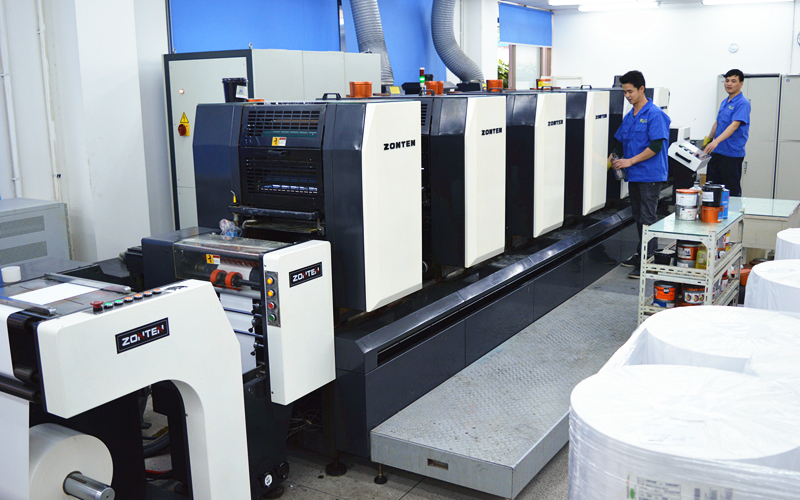
Production costs and process complexity are the key technical factors that decide MOQ. The more complex the production process, the higher the upfront fixed costs. Factories therefore need larger order sizes to spread these expenses.
Whether you make 100 pieces, 10,000 pieces or even more, there are fixed start‑up costs before production begins. These include machine setup, plate‑making, mold creation and sample proofing.The bigger your order, the lower this fixed cost works out for each individual item. If the order size is too small, the unit cost will jump sharply, and the factory may even lose money on the job.
Basic standard labels often look plain. Many buyers add special finishing to get better visual results. More complex finishing means higher fixed start‑up costs. This explains why custom labels generally have a higher MOQ than ready‑made standard labels.
Custom labels require brand‑new artwork, separate molds and exclusive color matching. For complicated screen printing, a separate printing plate is needed for every single color. High‑quality epoxy dome labels demand precision molds. All of these increase initial expenses. Each extra special process, such as hot stamping, UV coating or lamination, adds extra labor, equipment wear and energy use, which usually drives up the unit price.
In addition, the first several dozen pieces during a print run often have a higher reject rate. This comes from color testing when the machine just starts up. The smaller your total order, the larger percentage these wasted trial pieces represent for the whole job.
Raw Material Procurement and Supply Chain Limitations
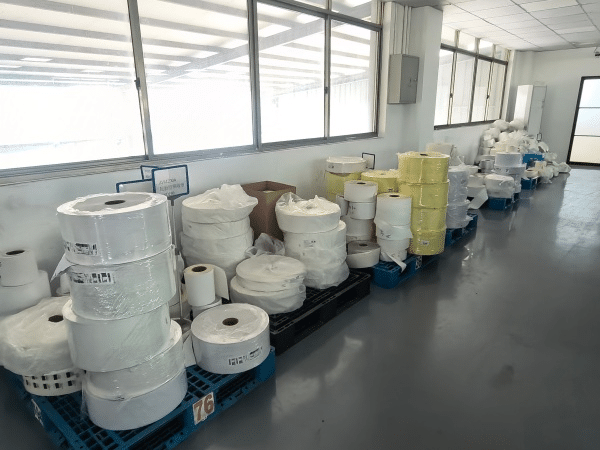
Quite often, it is not that factories refuse small‑size orders on purpose. Instead, they are limited by their upstream raw‑material suppliers.
Factories themselves are customers of those raw‑material and packaging suppliers. To guarantee their own profits, upstream suppliers also set their own minimum order quantities.
The face stock for adhesive labels comes out from the factory in huge master rolls. Material suppliers sell these rolls to printing houses usually by the roll or by the ton. Label materials are usually purchased in large rolls from upstream suppliers. When a customer orders only a small quantity, the unused material becomes additional inventory for the manufacturer.
If you only place an order for 1,000 labels, the printer has to buy one full master roll from its supplier to fulfil your job. After cutting out your 1,000 labels, the remaining 99,000 blank label sheets become unused stock sitting at the factory. That is why the printer sets a higher MOQ, hoping to use up the whole roll of material.
For special face stocks such as clear PET, high‑temperature‑resistant PI film, and security holographic paper, upstream suppliers have even stricter MOQ rules. Sometimes they require you to buy a full ton. This directly pushes up the MOQ for these labels compared with regular coated paper labels.
When your labels require custom Pantone colors or metallic colors, printers need at least 5‑10 kg of ink for color testing and cleaning the ink tank. A small order may only actually use 0.5 kg of ink. Leftover ink will be thrown away if there are no follow‑up orders to reuse it. To cover this ink waste, factories either raise the MOQ or charge a special color start‑up fee.
For flexographic and letterpress printing, every separate color needs its own printing plate. Plate‑making costs are fixed. When your order is very small, spreading the plate cost across just a few labels makes the unit price extremely high. To stop customers from cancelling orders due to steep pricing, factories set an MOQ so plate costs can be shared reasonably.
Some custom labels have unique shapes and need a custom cutting die. Die‑making costs range from several hundred to several thousand yuan. If the factory already has an existing standard die matching your label size, your MOQ can be much lower. However, for unusual sizes where the die cannot be reused, the MOQ has to go up.
To make small orders possible, some factories offer a combined‑die service: multiple customers share one cutting die. Still, this works only when labels have nearly the same size, and your production schedule will be restricted.
For all these reasons, factories do not set MOQ out of personal preference. Their goal is to spread fixed upfront costs properly, so they can avoid excess inventory and problems across the whole supply chain.
Factory Size, Production Capacity, and Efficiency
Factories of different sizes have very different business goals and ways of working.
Large‑scale factories focus on keeping their production lines fully used and running steadily. They prefer long‑term, large‑volume orders. To stay efficient, they try to avoid frequent line changes. That is why they usually set a higher MOQ for very small orders.
Small‑to‑mid‑sized factories and workshops operate more flexibly. They are willing to take small orders. However, due to limits on their equipment and management, their unit prices may be higher.
If a factory has extra spare production capacity, it can fill its production lines with big orders while also fitting smaller jobs into the schedule. This reduces extra costs for small‑batch runs and makes low MOQ possible.
When it comes to production efficiency: once a production line finishes one product and switches to another, the machines have to stop. Workers need to change dies, adjust settings and clean the equipment. There is a fixed cost for this whole change‑over process. If your order quantity is very small, this fixed switching cost gets spread across only few items. For this reason, factories set a higher minimum order quantity, so money earned from one production run can cover the switching expense.
For large‑volume jobs, workers keep repeating the same task. They get faster and more skilled over time. If the factory handles lots of small orders instead, production steps keep changing frequently. Sometimes workers even need to learn new operations. Work slows down, and there are extra hidden management costs. These losses also push factories to require a higher MOQ.
For small orders, these fixed setup costs are spread across fewer labels, resulting in a higher cost per label.
Cooperation Model and Business Strategy
If raw‑material and machine‑related costs are physical limits, then cooperation terms represent a business negotiation where buyers and sellers balance risks and benefits. Buyers may negotiate with factories to get a lower MOQ.
Factories set MOQ mainly to spread fixed start‑up fees, plate‑making charges and losses from machine adjustments. If customers are willing to change payment terms, they can directly reduce risks for the factory and in return achieve a lower MOQ.
For custom‑shaped labels, a separate cutting die is required. If the customer covers the die cost ranging from several hundred to several thousand yuan, this fixed‑cost risk is removed for the factory. As a result, the MOQ for this whole batch of labels can drop significantly.
If the customer pays a large deposit or even the full payment upfront, the factory’s risk of advancing funds and bad debt is greatly reduced. Usually the factory will make concessions on MOQ in this case.
MOQ is not a fixed number forever. Factories adjust it dynamically based on their production schedules.
During the off‑season, production capacity sits idle. To keep machines running and workers employed, factories are more open to small‑batch orders with acceptable profit margins. There is plenty of room to negotiate MOQ at this time.
In the busy season, production capacity becomes tight. Factories prioritize big clients and large‑volume orders. The MOQ threshold for small orders rises sharply, and some factories may even stop accepting small jobs.
How Can You Reduce the MOQ for Custom Labels?
Besides paying extra fees to cover the factory’s fixed costs, are there other ways to lower MOQ? Yes. Buyers can combine different orders.
If you need several label designs with the same material and finishing, group them into one single total order. The factory only needs one production run and one color adjustment. Fixed costs are shared across multiple SKUs, so the minimum quantity requirement for each individual design goes down.
Building long‑term cooperation and planning pre‑stock can also help. Show your supplier your future purchasing growth potential or reserve inventory in advance. This helps the factory arrange stable production schedules. In return, factories usually offer more flexible MOQ rules for long‑term partners.
FAQ
What is the typical MOQ for custom labels?
Why do custom label manufacturers set minimum order quantities?
Can I order custom labels with a low MOQ for a new product launch?
How does the printing method affect custom label MOQ?
Does ordering a higher quantity always reduce custom label costs?
How can I reduce the MOQ for my custom label order?

Need Help Customizing Your Own Packaging Design?
Whether you need Cosmetic Labels, Wine Labels, Food Labels, or Custom Adhesive Stickers, our experts can recommend the best material based on your product, application, and budget.