
How to Customize Labels for Food Packaging?
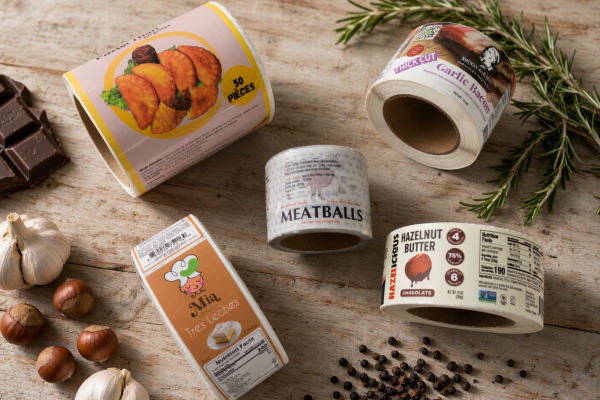
When engineering custom food packaging labels, it is essential to account for your specific container type, label dimensions, required regulatory messaging, face-stock materials, specialized adhesives, and protective finishes. Unlike standard packaging labels, food labels must be specifically engineered to withstand demanding storage environments—including deep freezing, condensation, oil contact, and frequent handling.
A custom food packaging label does far more than just showcase your brand identity on store shelves. Crucially, it must present product details with absolute clarity, maintain high-contrast 1D/2D barcode scannability, resist environmental degradation, and meet stringent statutory labeling mandates in your target market.
Pre-Production Proofing & Quality Control
Prior to initiating mass production, we review and approve detailed digital press proofs with you. This vital step verifies all artwork elements, vector cut-lines, color separation specifications, and print resolution to guarantee flawless execution on press.
U.S. FDA Regulatory Compliance
In the United States, commercial food product labeling is strictly regulated by the Food and Drug Administration (FDA). Essential mandatory panels include: Statement of Identity, Net Quantity of Contents, Ingredient List, Nutrition Facts Panel, and Major Food Allergen disclosures.
What Information Should Be on a Food Packaging Label?

Essential Food & Beverage Label Requirements
Labeling requirements vary by product and market. Before printing, please verify the relevant regulations in the country or region where the food is sold; the United States is used here as an example.
- Product Name: Identifies the specific food product
- Net Quantity: Shows the exact amount or weight of product
- Ingredient List: Informs consumers of all included ingredients
- Allergen Information: Highlights major food allergens and warnings
- Nutrition Facts: Provides detailed nutrition panels where required
- Manufacturer Information: Identifies the responsible business/distributor
- Barcode: Supports retail scanning and inventory tracking
- Lot / Batch Number: Enables precise product tracking and safety recalls
- Best-By / Expiration Date: Indicates product shelf life and freshness
- Storage Instructions: Explains required storage or refrigeration conditions
- Brand / Logo: Builds brand recognition and visual identity
For packaged food products, please verify your artwork against U.S. FDA regulations and local food packaging laws prior to bulk printing to guarantee 100% compliance.
How to Choose the Right Material and Adhesive for Food Packaging Labels
The right material depends on the food product, packaging surface and storage environment. Paper labels are suitable for many dry food products and can provide a natural or premium appearance. For products exposed to moisture, condensation or frequent handling, film materials such as BOPP or PET can provide better durability.
| Application | Common Label Material | Why Choose This Material |
|---|---|---|
| Dry Food | Paper, BOPP | Cost-effective for ambient storage; paper offers a natural/organic tactile aesthetic, while BOPP provides a crisp, tear-resistant finish. |
| Refrigerated Food | Moisture-Resistant BOPP or PET | Withstands temperature fluctuations, moisture exposure, and condensation buildup without smudging ink or degrading the paper base. |
| Frozen Food | Freezer-Grade Film (BOPP/PET) | Synthetic films remain flexible at sub-zero temperatures (−18°C or lower) without cracking, peeling, or absorbing frost moisture. |
| Oily Food | Oil-Resistant Film or Coated Paper | Barrier coatings prevent essential oils, dressings, or butter from staining the face stock, preserving clear barcode scannability and brand appeal. |
| Glass Jars | Paper, BOPP, Textured Paper | Textured paper adds a rustic, artisanal touch for honey and jams, while smooth BOPP ensures excellent clarity and high adhesion to smooth glass. |
| Beverage Bottles | Waterproof BOPP or PET | Impermeable to ice bucket immersion and heavy condensation; prevents label edge lifting and ink run-off during active handling. |
| Premium Food Products | Textured Paper, Foil, or Specialty Stocks | High-end tactile textures and metallic foil accents elevate brand perception for gourmet treats, chocolates, and reserve condiments. |
| Clear Packaging | Clear BOPP | Delivers an invisible “no-label look,” making colorful food products visible inside transparent plastic or glass containers. |
The adhesive should also match the packaging surface and storage conditions. Standard adhesives may work well for room-temperature applications, while refrigerated or frozen products may require adhesives designed for low temperatures and moisture exposure. Glass, plastic and other packaging surfaces can also require different adhesive constructions. Choosing the material and adhesive together helps prevent common problems such as edge lifting, bubbles or label detachment during storage and transportation.
How to Customize the Design, Size, and Shape of Food Labels
1. Precision Sizing, Taper Matching & Prepress Setup
Unique contoured containers such as tapered jars, curved bottles and squeezable plastic containers require specialdesign consideration to prevent wrinkles, bubbles and edgeflagging.
- ✓ Accurate Container Measurement: You can use a flexible tape measure to wrap around the flat labeling area of the container to determine the exact dimensions. For complete instructions, please refer to our detailed article “How to Measure Sticker Size”.
- ✓ Automated Dispensing Gap: For automated application, we engineered strict 1/8″ (3.175mm) gap tolerances between labels on the roll, preventing sensor misfires on high-speed labeling lines.
- ✓ Mandatory Artwork Bleed Area: For all labels we require a minimum background bleed of 1/16″ (1.5mm) up to 1/8″ (3mm) on all edges of the die line. This allows for slight movement during high-speed cutting and prevents any unprinted white edges.
2. Custom Shapes & High-Speed Application Guidelines
While custom die-cut shapes boost shelf appeal,complex vector cut-out lines on release liner for self adhesive can be problematic in production. When applying automaticall to high-speed packaging lines, certain design considerations have to be taken into account to achieve smooth application.
- ✓ Incorporate Radius Corners: It is important to avoid sharp internal angles (90° or even acute corners) when designingvector cut-lines for your custom stickers. A minimum 1/16″(1.5mm) corner radius is recommended. This will prevent tears in the release liner during the matrix stripping process and stops label edges from lifting on containers.
- ✓ Optimize for Kiss-Cutting vs. Die-Cutting: If your labels are supplied on rolls for automated machinery, stick to clean, continuous contours. Overly complex starbursts or narrow cutouts can catch on machine dispensing blades, leading to jam-ups during high-speed bottling.
- ✓ Separate Cut-Line Layer: Always place your final die cut-line on a separate, dedicated vector layer named “DieLine” using a distinct spot color. This ensures your custom contour is clearly defined for precise plate-making and rotary die tooling.
3. Press-Ready Artwork & Prepress Setup Standards
In preparation for the translation of digital concepts to label to prevent unwanted color change or blurred text on the end substrates, specially prepared artwork must be supplied in order product. The prepress design guidelines are outlined below.
- ✓ Setup Spot White Layers for Special Substrates: When designing for Clear BOPP or Metallic Foil stocks, specify a separate vector layer named “Spot White” for opaque areas (like product graphics and nutrition facts). This prevents inks from appearing translucent against dark bottles or metallic backgrounds.
- ✓ Design in CMYK or Specify PMS Colors: Design in CMYK or specify PMS colors for solid colors. For repeat printing, we require you to specify the exact PMS color to guarantee print color accuracy(ΔE < 2).
- ✓ Outline Fonts & Maintain Minimum Stroke Weights: Convert text to outlines (curves) to avoid any risk of font substitution. Small text should be at least 4pt in weight and positive lines should be at least 0.25pt (0.5pt for reverse-out/negative printing) in weight to ensure that they print well.
How to Choose Printing, Finishing, and Label Format
Printing Methods, Surface Finishes & Supply Formats
Optimal Printing Method Selection
Once materials and artwork are confirmed, select the printing process based on volume and requirements. Digital Printing suits shorter runs, multiple SKUs, and flexible design changes without plate costs. Flexographic Printing is the industry standard for medium to large production runs, while Offset Printing handles high-volume projects requiring fine graphic detail on specialized paper stocks.
Label Format & Application Compatibility
Match your label supply format to your packaging process. Roll Labels are engineered for high-speed automatic labeling machinery and bulk production. For roll format orders, ensure key technical specifications—including core size, unwind direction, label gap spacing, and maximum outer roll diameter—are verified against your equipment guidelines before production.
Value-Added Finishing Options
Enhance both visual appeal and environmental durability with specialized surface treatments:
Matte Lamination: Delivers essential surface protection while creating a soft, elegant appearance and reducing glare under retail lighting.
Gloss Lamination: Imparts high water and tear resistance, boosting color vibrancy with a reflective, premium shine.
Hot Foil Stamping: Applies metallic gold, silver, or custom foils to artwork and text, immediately elevating luxury brand positioning.
Embossing / Debossing: Creates distinct 3D tactile contours and subtle light-and-shadow effects to highlight logos or key messaging.
Spot UV Coating: Adds a selective high-gloss varnish over targeted design elements, creating a striking contrast against matte backgrounds and a raised three-dimensional texture.
FAQ
What mandatory information must be included on custom food labels?
How do I choose the right label material for frozen or refrigerated products?
What design considerations are needed for high-speed automated labeling lines?
Why is a “Spot White” layer necessary when printing on Clear BOPP or Metallic stocks?
What are the key differences between Matte and Gloss lamination for food labels?
What artwork specifications should I follow to ensure high print quality?

Need Help Customizing Your Own Packaging Design?
Whether you need Cosmetic Labels, Wine Labels, Food Labels, or Custom Adhesive Stickers, our experts can recommend the best material based on your product, application, and budget.