
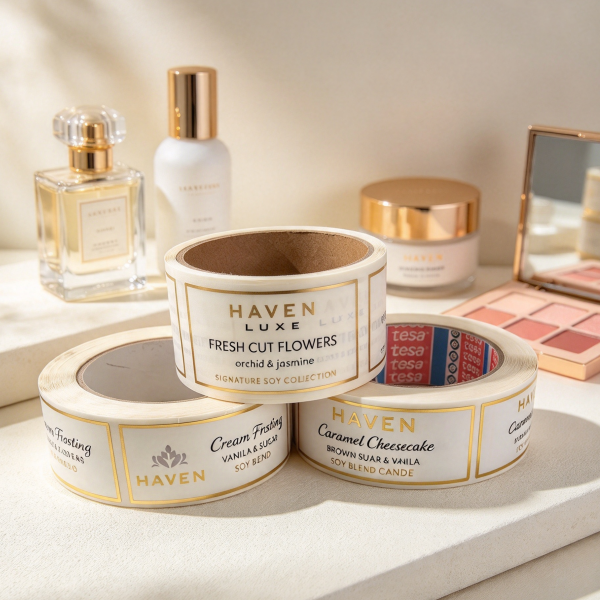
Labeling small cosmetic bottles or jars can be particularly challenging as there is little space to position your company logo and further product information and a list of the used ingredients. What looks fine on the computer monitor can be distorted when printed out and then wrapped around a small bottles or applied to curved jars.
When designing for skin care, cosmetics and private label companies, a small cosmetics label doesn’t have to mean a smaller label. It is important to cleverly merge required information with brand oriented aesthetics at the onset of design. It is crucial to produce information that is clearly readable and not detrimental to aesthetics and upscale feel of packaging.
This guide explains how to label small cosmetic bottles and jars, from measuring the container to selecting materials and preparing artwork for production.
Measure the Bottle or Jar Before Designing the Label
Determine the area that can be used for labeling a bottle is the first step. The total height of a bottle or jar is not necessarily the height available for a label.The shoulders, curved bottom, neck, threads and transitions at the lid all affect where a label can be applied satisfactorily.
How to Measure Small Cosmetic Bottles
Determine the area that can be used for labeling a bottle is the first step. The total height of a bottle or jar is not necessarily the height available for a label.
The shoulders, curved bottom, neck, threads and transitions at the lid all affect where a label can be applied satisfactorily.Measure the diameter of cylindrical bottles, and the straight area on containers of other side shapes for label application.
For a wrap-around label the container’s circumference can be:
Circumference = Diameter x 3.14
For example, a small cylindrical serum bottle has a diameter of 1.10 in. The circumference is approximately 3.46 inch. The final label width needs to be calculated based on the shape of the bottle, the required gap between the edges of the label and the adhesive’s ability to adhere to curved surfaces.
It should also be noted that don’t automatically extend the label to the full circumference of a bottle. A long label around a small container can create an uneven seam or even lift from the edges.
How to Measure Small Cosmetic Jars
For cream jars and eye cream containers, measure the usable sidewall height and the diameter of the lid separately. Depending on the packaging design, you may need:
A front or side label for the product name and branding.
A wrap-around label for product details.
A round lid label for the logo or product variant.
A separate bottom label for additional product information(where required).
Always measure the actual production container and not only the nominal volume as indicated by the supplier (e.g. 15 ml,30 ml,50 ml)
If you would like to learn more about how to measure label dimensions, you can read”How to Measure Sticker Size:
The Ultimate Measuring Guide“
Choose the Right Label Format for Each Container
The label layouts for different cosmetic containers vary. The optimal solution depends on the available surface area, the amount of information to be displayed, and how the product is used.
Small Cosmetic Bottle and Jar Label Size Chart
The right label size depends on the container’s diameter, usable surface area, shape, and the amount of information required. The following chart provides illustrative starting points for common cosmetic packaging formats. Always measure the actual container before finalizing the label dimensions.
| Cosmetic Container | Example Container Dimensions | Suggested Label Size to Start With | Recommended Label Format |
|---|---|---|---|
| 15 ml serum bottle | 25–30 mm diameter | 45–65 mm W × 25–35 mm H | Front label or partial wrap label |
| 30 ml serum bottle | 30–35 mm diameter | 55–75 mm W × 30–45 mm H | Front/back labels or partial wrap label |
| 50 ml skincare bottle | 35–45 mm diameter | 65–90 mm W × 35–55 mm H | Front label or wrap label |
| 15–30 ml eye cream jar | 35–45 mm diameter | 50–75 mm W × 10–20 mm H for the side label | Side label plus optional lid label |
| 50 ml cream jar | 45–60 mm diameter | 70–100 mm W × 15–25 mm H for the side label | Wrap label or front label |
| 100 ml lotion bottle | 40–50 mm diameter | 75–110 mm W × 45–65 mm H | Front/back labels or wrap label |
| Small essential oil bottle | 20–30 mm diameter | 35–55 mm W × 20–35 mm H | Narrow front label or partial wrap label |
| Cosmetic sample vial | 10–15 mm diameter | 20–35 mm W × 10–20 mm H | Narrow identification label |
These are for reference only and are not standard sizes. Actual label sizes must be determined based on the container’s geometry and the information required on the final packaging.
For products with multiple packaging sizes, the label layout should be designed separately for each container, rather than simply scaling a single design up or down.
Pick the Suitable Materials for Small Cosmetic Labels
The right label material affects print quality, appearance, flexibility, and adhesion on small cosmetic containers. When selecting custom cosmetic labels, consider the bottle or jar material, product exposure, available labeling space, and desired finish.
| Label Material | Key Benefits | Suitable Applications | Important Considerations |
|---|---|---|---|
| Coated Paper | Smooth surface, sharp text, and vibrant color reproduction | Dry-use skincare products, cream jars, and budget-conscious cosmetic lines | Less suitable for frequent water or oil exposure unless the complete label construction provides adequate protection |
| White BOPP | Water resistance, flexibility, and cost-effective performance for everyday packaging | Shampoo, body wash, lotion, and skincare bottles | Check adhesive compatibility with the container surface and test adhesion under expected moisture and handling conditions |
| Clear BOPP | Transparent appearance for a minimalist, no-label-look design | Clear glass or compatible plastic serum bottles, skincare packaging, and transparent containers | White ink may be needed to improve text contrast. The contents and background can affect readability |
| PET Film | Good dimensional stability, tear resistance, and durability | Premium cosmetic bottles, selected products exposed to oils or chemicals, and applications requiring a durable film label | Confirm compatibility with the actual product formula, container surface, and adhesive. PET film alone does not guarantee chemical resistance |
| Synthetic Paper | Paper-like appearance with improved resistance to moisture compared with ordinary paper | Lotion bottles, essential oil packaging, and products needing a paper-style look with added durability | Performance varies by construction. Check print compatibility, flexibility, and adhesive performance before production |
| Specialty Paper | Distinctive texture and a premium tactile appearance | Luxury skincare, perfume, limited-edition packaging, and premium cosmetic jars | Some paper stocks are more sensitive to moisture, oil, abrasion, and curved surfaces. Test the selected stock in the intended application |
| Metallic or Holographic Materials | Reflective effects and distinctive shelf appeal | Premium beauty products, promotional packaging, and selected anti-counterfeiting applications | Metallic surfaces can affect color appearance and contrast. Confirm readability, finish compatibility, and the intended visual effect with a printed sample |
Material Selection Tips for Small Cosmetic Labels
Before ordering in bulk: Test the complete label construction on the actual container. Material, adhesive, printing, lamination, and application conditions all contribute to the final result.
For wet environments: Consider white or clear BOPP when the label needs to withstand routine splashes or moisture. The adhesive and any protective finish must also suit the application.
For clear bottles: Clear BOPP can provide a transparent appearance. White ink can help maintain contrast when the artwork needs a solid white background or more legible text.
For premium packaging: PET film, specialty paper, and metallic materials can create different visual and tactile effects. Choose based on the brand’s appearance goals and actual performance requirements.
For very small containers: Consider material flexibility, text readability, and the label’s ability to conform to the bottle’s curvature. A material that works well on a large flat jar may not perform equally well on a narrow vial.
How to Design Readable Cosmetic Labels for Small Containers
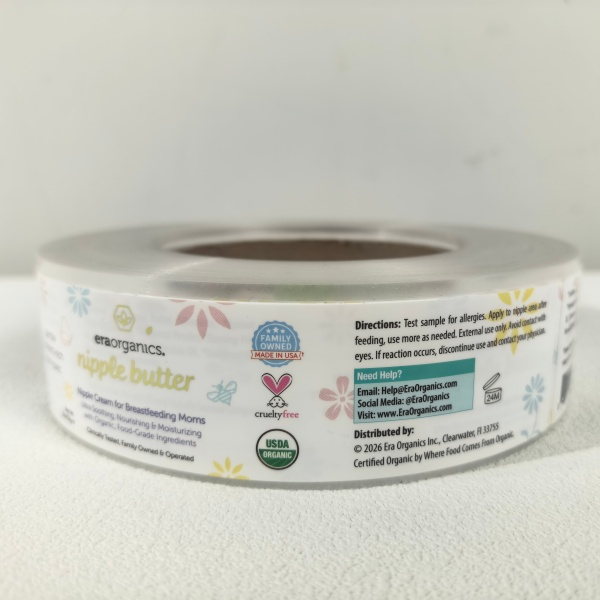
Avoid telling the entire brand story on the bottle of a product.Long story often leads to overcrowded text which does not create a good impression and doesn’t look professional. Establishing a clear information hierarchy is a more effective approach.
Prioritize the Front Label
Product recognition information such as brand / logo, product name / type and optional brief description must be placed on the front label. Variant / shade information must also be included where necessary. Keep the design simple and use plenty of white space around the logo and product name.
Keep Small Text Legible
Required information like ingredients, usage instructions and warnings must appear on the packaging. The required content differs by product and market.
Before shrinking font sizes, check if this information can go on the back label, side panel, bottom label, or outer carton instead.
Make sure text and background have strong contrast. Thin text, low-contrast colors, and decorative fonts do not print well at small sizes.
If your label has tiny text, thin lines or long ingredient lists, order a printed proof or physical sample first. This prevents extra work if the final print does not turn out as expected.
Check Label Artwork at Actual Size
Just because something looks good on your screen doesn’t necessarily mean that it will print well at the final label size.Print your design in exact scale and test the readability of brand names and product identifiers, list of ingredients and usage instructions, barcodes and QR codes. Pay attention to thin lines and small graphics as well as to the margins around the edges and label seams. Also check the flat version of the label and the label on bottles. The curved surface of the small bottles can make a big difference to how your design looks from the front.
Choice of Process for Small Cosmetic Labels
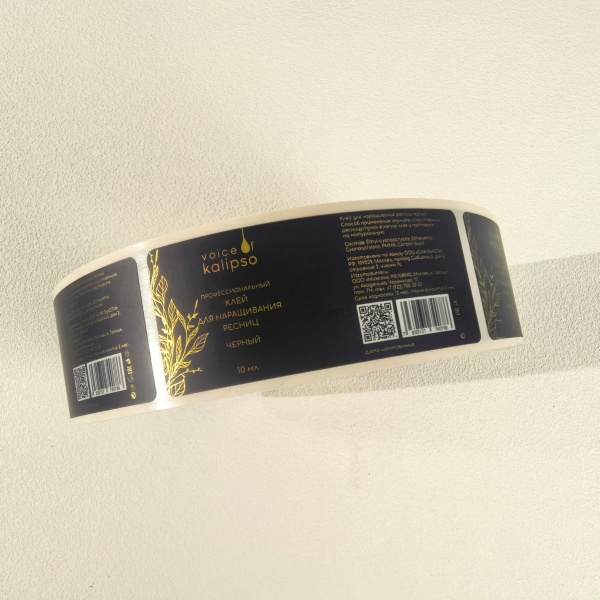
Foil Stamping and Metallic Effects
If you pursuit of premium highlights on a label surface, hot stamping and metallic effects are very suitable. However, small-area hot stamping can be considered, whereas large-area metallic effects require testing.
When labels are affixed to curved bottles, the large-area metal layer is prone to cracking and will compress the limited space for small text.And check the alignment of all foil elements, fine details and text on the label prior to production approval against the final dimensions of the label.
Matte and Gloss Finishes
Matte finishes give a flat and subtle appearance where as glossy finishes give a brighter appearance. For small cosmetic labels both can work, depending on brand identity and intended use. Coatings and laminations should also be evaluated in terms of their effect on label flexibility and adhesion.
Embossing and Spot UV
For small cosmetic labels, embossing and spot UV can be an option, but with limitations. Some details can’t be reproduced with embossing. Raised embossing or thick spot UV coating can crack when labels are applied to curved surfaces.Remember that very fine detail such as small text can suffer from blurring with emboss, deboss, and spot UV applications. Before proceeding to full production, make a physical sample and test it for texture, adhesion, and flexibility.
FAQ
What Is the Best Label Size for Small Cosmetic Bottles?
What Is the Best Label Material for Small Cosmetic Bottles?
How Do I Prevent Labels from Wrinkling or Peeling on Small Bottles?
How Can I Fit Ingredients and Product Information on a Small Cosmetic Jar?
Are Clear Labels a Good Choice for Small Skincare Bottles?
Can I Order Custom Cosmetic Labels in Different Sizes for One Product Line?
What Information Should I Provide When Requesting a Custom Cosmetic Label Quote?
Should I Request a Sample Before Ordering Small Cosmetic Labels in Bulk?

Need Help Customizing Your Own Packaging Design?
Whether you need Cosmetic Labels, Wine Labels, Food Labels, or Custom Adhesive Stickers, our experts can recommend the best material based on your product, application, and budget.