
Double Sided Label Printing:
Elevate Transparent Packaging
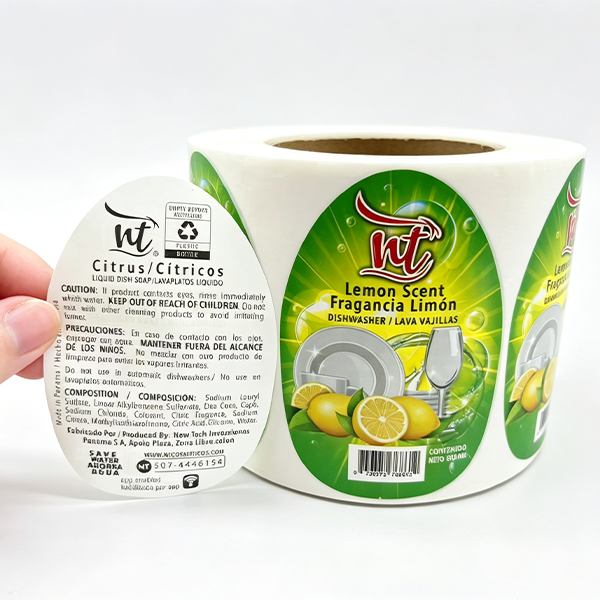
You ever notice how packaging design feels like an impossible puzzle? The designer wants to tell you every information but the label itself is just a sliver of space.
They tried various methods, such as shrinking the font size, rearranging elements, and squeezing the warning message next to the logo. But the results were often unsatisfactory, not only ruining the visual appeal but also failing to meet regulatory requirements.
Legal compliance and a clean look? You can’t really have both with those old single-sided labels. Double-sided label printing, an innovative packaging solution that breaks through the space limitations of traditional labels, solves these problems.
Sided label printing is a printing method that prints pictures and words on both sides of a label material that is clear or partly clear. When this label is put on a container like a glass bottle, a plastic jar or a makeup tube the picture, on the back can be seen clearly through the bottle wall and the liquid inside. This gives a look that labels with only one side cannot offer.
How Does Double Sided Label Printing Work

Core Layer Structure
A standard double sided label consists of three indispensable functional layers, each undertaking an independent printing task to avoid visual interference between front and back designs:
Front Graphic Layer This layer faces consumers directly, carrying core brand visual elements including logos, product names, core slogans and main decorative graphics. It prioritizes concise, eye-catching designs to deliver brand recognition at first glance.
Opaque White Ink Barrier Layer Printed between the front and back graphics, this white ink barrier acts as a light-blocking partition. Without this layer, light transmission would make front and back patterns overlap, resulting in blurred, messy visuals. The white ink effectively separates two sets of printed content and ensures both sides display colors accurately and vividly.
Back Graphic Layer Printed on the substrate’s reverse side, this layer holds supplementary information that does not need immediate exposure. Brands can print extended brand stories, complete ingredient tables, step-by-step usage instructions, small promotional illustrations or encrypted QR codes here. Consumers can view the back content through transparent packaging and liquid inside the container.
Main Printing Forms
Two mature industrial printing processes are widely adopted for double sided labels:
Single-pass / Multi-layer Printing
The front design, white ink layer, and back design are all printed in a single continuous production process.
This technology features ultra-high printing precision and completely eliminates alignment shift or dislocation risks caused by post-lamination. It suits high-standard mass production of cosmetics, beverages and premium skincare products.
Sandwich Printing
Named after its sandwich-like “graphic-white ink-graphic” stacking structure. The white opaque ink is clamped between two layers of artwork. This process offers flexible color adjustment for front and back patterns and is suitable for customized small-batch packaging orders.
Ideal Applications & Industries
Strategic industry applications and visual impact overview for transparent packaging.
| Industry | Typical Products | Visual Effect & Strategic Value |
|---|---|---|
| Cosmetics & Skincare | Essential Oils Clear Serums Facial Cleansers Toners | Creates a clean, minimalist aesthetic. The front label highlights the core brand logo, while ingredients and usage guidelines are clearly readable through the liquid from the back. |
| Spirits & Beverages | Craft Gin Vodka Craft Beer Sparkling Water | Leverages the liquid’s refractive index to produce a 3D depth effect or magnifying illusion. Ideal for showing custom background artwork or distillery heritage. |
| Personal & Household | Clear Soaps Body Washes Shampoos Dish Liquids | Maximizes limited space without cluttering the front. Keeps regulatory details, warnings, and QR codes accessible via the back while maintaining shelf appeal. |
| Gourmet Food & Oils | Olive Oil Specialty Syrups Glass Jams Honey | Enhances product authenticity and transparency. Allows clear viewing of natural contents while presenting origin stories, recipes, or certification badges on the reverse side. |
FAQ
What is double sided label printing and how does it work?
Double sided label printing is a process where artwork is printed on both the front and the adhesive/back side of a clear label. It uses a 3-layer “sandwich” structure: Front Design + Opaque White Barrier Layer + Back Design. This ensures the back graphic is visible through a clear container and liquid without bleeding through to the front design.
What types of products are best suited for double-sided labels?
They are ideal for products packaged in transparent glass or plastic (PET/PP) containers. Common applications include spirits (gin, vodka), craft beverages, cosmetics (serums, essential oils), clear shampoos, hand soaps, and gourmet oils or syrups.
Will the graphics on the back interfere with the front label design?
No, provided a high-density white ink barrier layer (opaque layer) is printed between the two sides. This middle layer acts as a light blocker, keeping both front and back graphics sharp, opaque, and independent of each other.
What are the best materials for double-sided printed labels?
Clear BOPP (Biaxially Oriented Polypropylene) and Clear PET are the standard material choices. They offer superior optical clarity, excellent moisture and chemical resistance, and the durability needed for squeezing or handling.
Do double-sided labels require special clear adhesives?
Yes. To ensure the back design remains crystal clear through the container, an ultra-clear permanent acrylic adhesive is required. It prevents yellowing, hazing, or the “silvering effect” (tiny trapped air bubbles under the label).
Can I combine double sided label printing with special finishes like hot foil or embossing?
Absolutely. You can apply embellishments like Hot Stamping (gold/silver foil), Spot UV, Soft-touch matte laminate, or Embossing to the front surface to create a high-end contrast against the clear elements.
What should I consider when designing artwork for double-sided labels?
Key considerations include:
Correct file layering for the front artwork, white ink barrier, and back artwork.
Ensuring text on the back layer is flipped/oriented correctly for viewing through liquid.
Factoring in the color and opacity of the liquid inside the bottle.
Are double-sided labels more cost-effective than using two separate front/back labels?
Yes, in many cases! Using a single double-sided label reduces labeling machinery pass times, cuts down on liner waste, simplifies inventory management, and gives a sleek “single-label” premium aesthetic at a lower overall application cost.

Need Help Customizing Your Own Packaging Design?
Whether you need Cosmetic Labels, Wine Labels, Food Labels, or Custom Adhesive Stickers, our experts can recommend the best material based on your product, application, and budget.