
Paper Stickers vs. Vinyl Stickers:Difference & How to Choose
Stickers are not only versatile but also easy to use and affordable.We use stickers in our daily lives far more often than you might imagine. In everyday life, stickers can be used to label and organize household items and storage boxes; DIY stickers add a personal touch to phone cases and notebooks.Using them for floor games and 3D collage scenes during parent-child play is also a great option.
Stickers are cheap yet effective marketing tools for businesses. Many brands use them on product packaging, price tags, shipping labels and anti-counterfeiting seals. When stuck on cars or staff uniforms, they work as moving ads to spread brand images. Besides, custom stickers are popular giveaways at events. Frequent sight of these stickers helps customers easily remember the brand.
This article will introduce the two most common types of stickers: paper stickers and vinyl stickers.We hope this will help buyers make better choices based on their specific needs.

What are Paper Stickers?
The face stock of paper stickers is usually paper materials such as coated art paper, fancy paper or writing paper. We can write directly on the sticker surface, making them ideal for classification marking, note-taking, schedule management and decorative purposes.
Though paper stickers are very affordable, the natural properties of paper leave them nearly non-waterproof and easy to tear. When exposed to humid air, liquid or grease, they tend to wrinkle, suffer ink bleeding and structural damage.
Lamination can be applied to improve the durability and water resistance of paper stickers. While the film protects the sticker surface, the cut edges remain uncovered paper. If submerged in water for a long time or kept in highly humid conditions, moisture will seep in from the edges, soaking the inner paper and causing wrinkling or deformation. For this reason, paper stickers are mainly used in dry indoor settings.

What are Vinyl Stickers?
What is vinyl sticker? It’s made from flexible PVC film, which gives them excellent stretch and flexibility. They can be wrapped around curved surfaces—such as glass bottles, metal tubes, or plastic hoses—without wrinkling or peeling off.
Customization is their standout feature. We can freely customize stickers in a variety of colors, sizes, and shapes, making them equally suitable for small decorative accents or large-area coverage. At the same time, they support personalized DIY designs, allowing users to create custom patterns on demand according to their preferences and giving free rein to their creativity.
Unlike paper stickers, vinyl stickers offer superior physical properties—they are not only “>waterproof, oil-resistant, and UV-resistant, but also resistant to tearing and fading. Whether you keep them indoors or they’re out baking in the sun and rain, they stay looking good.
Differences Between Paper Stickers and Vinyl Stickers
| Comparison Dimension | Paper Stickers | Vinyl Stickers |
|---|---|---|
| Base Material | Plant fiber paper | Flexible PVC plastic film |
| Water & Moisture Resistance | Poor; prone to wrinkling, ink bleeding and degumming when encountering water | Excellent; resistant to rain, condensed water and water vapor |
| UV & Weather Resistance | Easy to yellow and fade within several months under sunlight; only suitable for shaded indoor use | UV film coated vinyl can serve outdoors for 3–7 years with stable color |
| Physical Toughness | Brittle, permanent creases after folding, easy to tear | Flexible and stretchable; fits curved surfaces without wrinkles, scratch-resistant |
| Oil & Chemical Resistance | Grease and cleaning agents will quickly blur printed patterns | Resistant to daily oil, alcohol and weak acid-base solvents |
| Service Life | Short-term use: several days to half a year | Long-term use: 3–8 years indoors, 1–5 years outdoors |
| Production Cost | Low unit price, high cost performance for mass orders | Higher raw material and processing costs |
| Surface Texture | Natural matte texture; non-laminated types support handwriting | Glossy or matte plastic texture, not suitable for handwriting |
| Environmental Degradability | Biodegradable, convenient for recycling | Long degradation cycle of plastic materials, weak environmental friendliness |
| Residue After Removal | Almost no adhesive residue after peeling | Long-term pasting will leave adhesive marks requiring detergent cleaning |
Application Fields of Paper Stickers
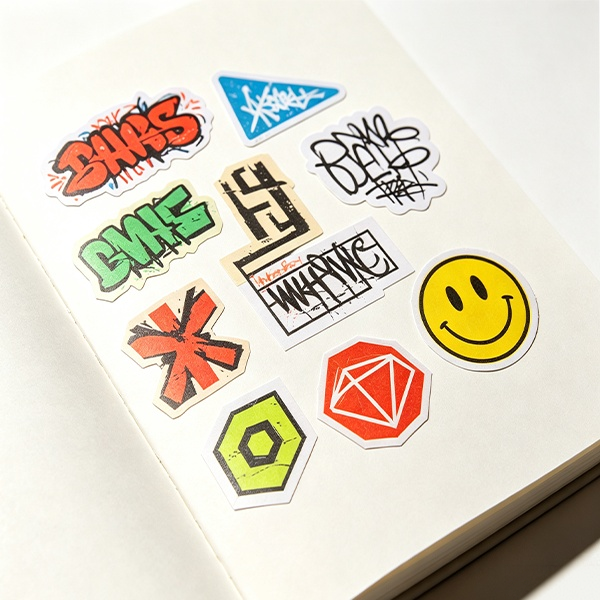
Paper stickers are suitable for dry, short-cycle and cost-sensitive indoor scenarios that do not require water and weather resistance.
- Food and gift packaging: Sealing labels for baked goods, pastry boxes, dried fruit gift boxes and tea packaging, which are discarded after one-time opening;
- Cultural and stationery supplies: Hand account decorative stickers, greeting card labels, book classification stickers and one-time event souvenir stickers for exhibitions;
- Warehouse and logistics temporary marking: Express waybills, temporary cargo classification labels and short-term inventory marking tags;
- Offline short-term marketing: Limited-time price tags, promotional gift stickers and temporary store poster decorations;
- Office management: Handwritten file classification labels, storage box marking stickers and archive tags under dry storage conditions.
Application Fields of Vinyl Stickers
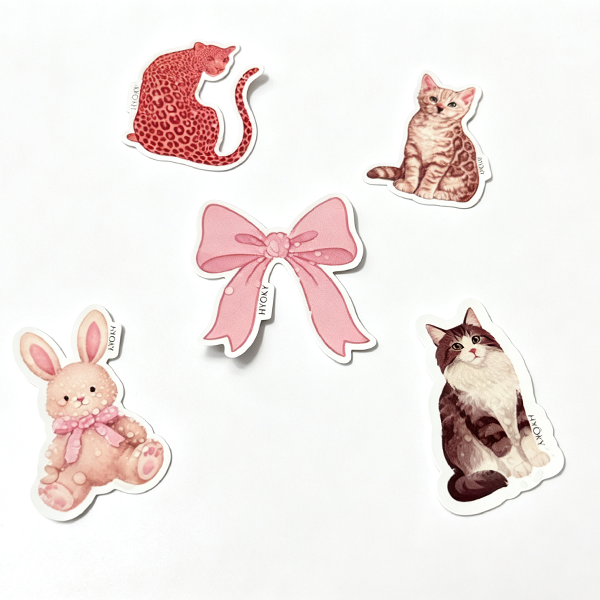
Vinyl stickers are preferred for scenarios requiring long-term retention, exposure to water and oil, outdoor display or attachment to curved surfaces.
- Outdoor commercial identification: Shop window advertising stickers, vehicle body decals, mechanical equipment warning labels and outdoor exhibition decorative signs;
- Liquid and refrigerated product packaging: Beverage bottles, body wash containers, cold sauce packaging and beer bottle labels that are often in contact with liquid;
- Daily personal accessories: Water cup stickers, luggage decorative labels, skateboard and helmet personalized decals;
- Industrial hardware supplies: Lubricating oil barrels, metal machinery, auto parts warranty labels, resistant to grease and chemical corrosion;
- Humid indoor environment: Refrigerator decorative stickers, kitchen condiment bottle labels and bathroom storage container marks;
- High-value long-term anti-counterfeiting seals: Premium wine packaging, electronic product tamper-evident labels that need to remain intact for years;
- Curved special packaging: Cosmetic soft tubes, arc plastic tanks and cylindrical packaging relying on the stretchability of vinyl to avoid edge warping.
FAQ
Which is better for eco-friendly product packaging, paper stickers or vinyl stickers?
Paper stickers are the more eco-friendly choice as they are biodegradable and recyclable alongside cardboard or paper packaging. Vinyl stickers are made from synthetic PVC plastic, which has a much longer degradation cycle and is less environmentally friendly.
Can paper stickers be made waterproof with lamination?
Lamination adds a protective plastic layer over the surface, making it water-resistant against splashes. However, moisture can still seep in from the unlaminated cut edges, soaking the inner paper fibers and causing wrinkling over prolonged exposure to liquid.
Why are vinyl stickers recommended for curved or flexible packaging?
Vinyl material possesses superior elasticity and flexibility compared to paper. It can seamlessly conform to curved, squeezable, or textured surfaces—such as cosmetic tubes, glass bottles, or plastic hoses—without creasing, bubbling, or peeling off over time.
How do paper stickers and vinyl stickers compare in price for bulk orders?
Paper stickers are significantly more cost-effective, making them ideal for high-volume, budget-sensitive applications like shipping labels and short-term promotions. Vinyl stickers carry higher raw material and manufacturing costs, but offer a much longer service life outdoors.
Can I write directly on the surface of custom vinyl stickers?
Generally, no. Standard vinyl stickers have a non-porous glossy or matte plastic surface that repels water-based inks and ballpoint pens. If you need hand-writable labels for inventory marking or dates, uncoated paper stickers are the recommended option.
How long will vinyl stickers last outdoors compared to paper stickers?
Vinyl stickers with UV-resistant coatings can last between 3 to 7 years outdoors without fading, cracking, or losing adhesion under rain and direct sunlight. Paper stickers are designed primarily for dry indoor use and will yellow or degrade within a few months under direct sun.

Need Help Customizing Your Own Packaging Design?
Whether you need Cosmetic Labels, Wine Labels, Food Labels, or Custom Adhesive Stickers, our experts can recommend the best material based on your product, application, and budget.