
What Are Self-Adhesive Labels? Materials, Types & Uses
Self-adhesive labels are labels that come with a pre-applied adhesive layer that sticks to a surface when pressure is applied. Also known as pressure-sensitive labels, they usually have three parts: face stock, backing glue and bottom paper.
The three layers are stacked together like a sandwich. There is no need to apply additional glue when using it, just peel it off from the backing paper and pat it on the object to stick. Although the structure is quite simple, there is a lot of knowledge in it.
This guide explains the structure of self-adhesive labels, common materials and adhesive types, suitable applications, and how to choose the right label for different environments.
What Are Self-Adhesive Labels?
Face stock
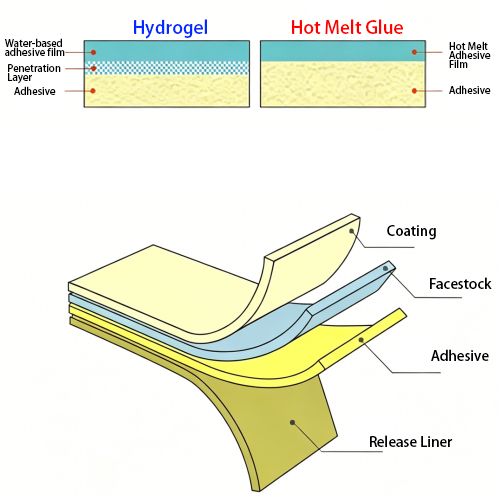
From the picture above, we can more intuitively understand the composition of self-adhesive labels. The first layer is the surface material. Surface materials are usually divided into two categories: paper and film.
All patterns and text that need to be printed are presented on this layer through a variety of printing methods, such as flexible printing, letterpress printing, offset printing, screen printing and heat transfer printing. The material of the surface material also determines the characteristics of the entire label, such as thermal paper, coated paper and other paper face stocks. They have a natural texture, like paper texture, matte or semi-glossy surface, good ink absorption, natural color restoration and easy degradation. They are recyclable and are good environmentally friendly materials. The disadvantages are also obvious. Although they can be coated with a film to make them resistant to water and tearing, they cannot be completely waterproof and tear-resistant.
If you want the label to be waterproof and tear-proof, you must choose film materials such as PET, PP, and PVC. They have excellent waterproof, oil-proof, chemical corrosion resistance, tear resistance, and weather resistance. The surface has a smooth texture and high gloss, and can produce a transparent or translucent effect; in terms of printing, corona treatment and other methods are required to achieve a good inking effect. This type of material is not without its shortcomings. Although it has a longer service life, the cost of membrane materials is relatively high and difficult to degrade. The combustion of some materials (such as PVC) may produce harmful gases.
Adhesive
The face stock determines the appearance, printing and durability of the label, and the adhesive determines the label’s adhesion properties. Different adhesive types have different levels of initial tack, cure speed, removability, and resistance to temperature or environmental conditions.
Water-based Adhesive
Water-based adhesive are typically used for general-purpose labeling and provide stable adhesion.The initial tack of water-based adhesive is relatively low. Labels peel relatively easily within the first 20 minutes after application, so adequate bonding time is required before handling or further processing.
Hot Melt Adhesive
Hot Melt adhesive provides strong initial tack and sets very quickly.The performance of hot melt adhesive can be affected by low temperatures, and can become less flexible.The temperature of application and storage must be taken into account.
Oil-based Adhesives
Oil-based adhesives have a high level of hold, and dry rapidly.Their strong adhesion makes them suitable for the majority of surfaces;particularly low surface energy materials such as PP, PE and PVC.They are also resistant to water, oil, chemicals and heat.Therefore, they are suitable for labels that are used in rough environments or need to stick for a long time.
However, oil-based adhesive have some restrictions as well.Their production process uses organic solvents, which release volatile organic compounds (VOCs), thus having a greater environmental impact compared to some water-based adhesives.Furthermore, they may have a noticeable solvent odor and require appropriate treatment during the production process.
Freezer Adhesive
Freezer adhesive are designed for use in cold and frozen environments like frozen food, refrigerated products and packaging that cones into contact with condensation or freezes.They stick to surface in cold temperatures.
However, adhesives for freezer use do need a bit of time to dry and reach their optimal bond.In general, the adhesive reaches its intended bonding performance after approximately 24 hours of application, so the label should not be subjected to demanding conditions immediately after application.
| Adhesive Type | Initial Tack | Bonding Strength | Temp Resistance | Main Advantage | Best Applications |
|---|---|---|---|---|---|
| Water-Based | Low | Moderate | -10°C to 80°C | Stable adhesion, eco-friendly, cost-effective | General packaging, indoor product labels, retail |
| Hot Melt | High | High | Low-temp sensitive | Rapid setting, strong initial tack | High-speed automatic labeling, logistics, shipping |
| Oil-Based (Solvent) | High | Very High | -30°C to 120°C+ | Resists water, oil, chemicals, outdoor harshness | Outdoor gear, chemical containers, low surface energy plastics (PP/PE) |
| Freezer Adhesive | Moderate | High (in sub-zero) | -40°C to 0°C | Bonds firmly on icy or condensation-heavy surfaces | Frozen food packaging, refrigerated products, cold chain logistics |
| Dual-Adhesive (Zone-Coated) | Varies | Custom (Removable + Permanent) | Moderate to High | Removable body with permanent sealing/tracking strip | Logistics track & trace, returnable envelopes, multi-part promotional coupons |
Release Liner
The release liner of a label,also referred ti as there bottom paper, is the backing of the label that protects the adhesive before the label is applied.The release liner keeps the adhesive clean to prevent the labels from sticking to each other during storage and handling.When using, just gently tear off the it.The choice of bottom paper can also affect label dispensing, die cutting, automatic labeling, and roll performance. Different liner materials and weights are therefore suited to different production and application requirements.
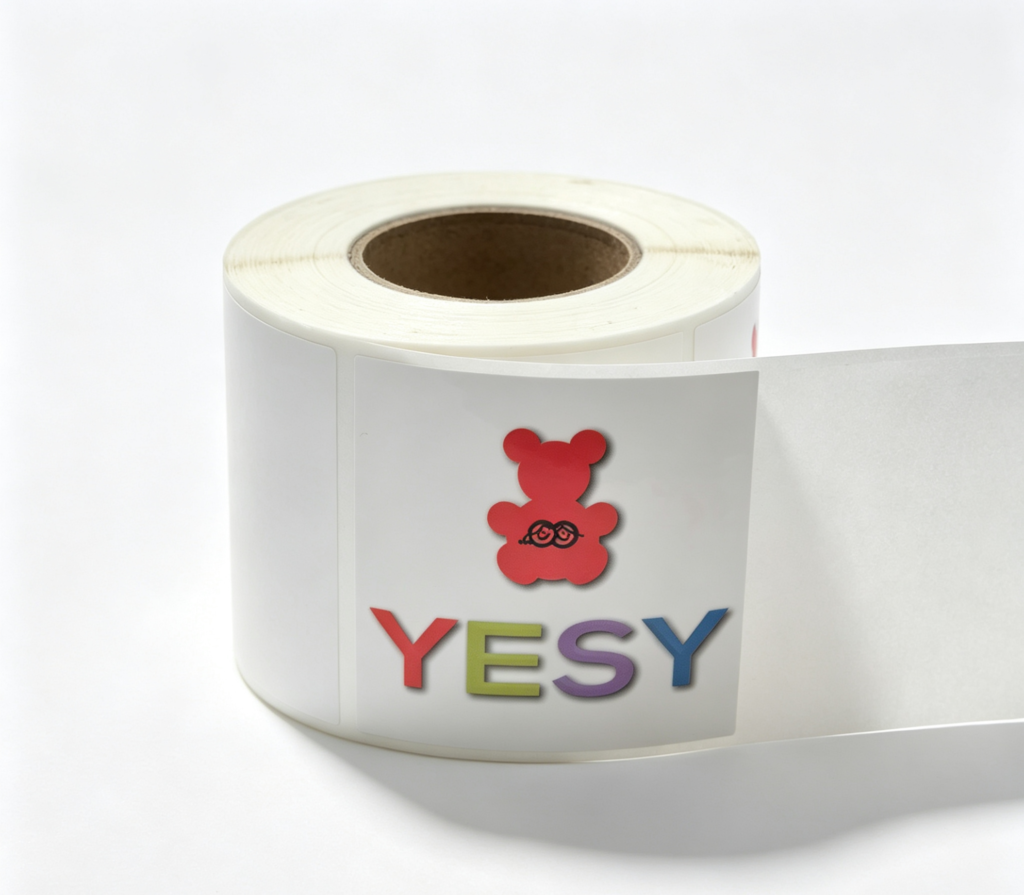
Glassine Paper
Glassine is a thin, semi-transparent paper often used as the release liner for self-adhesive labels.The smooth surface of Glassine makes it easy to removed and use labels, whether posted manually or automatically by machine.The paper is widely used for roll labels in automatic machines, where consistent release and stable web performance are essential.
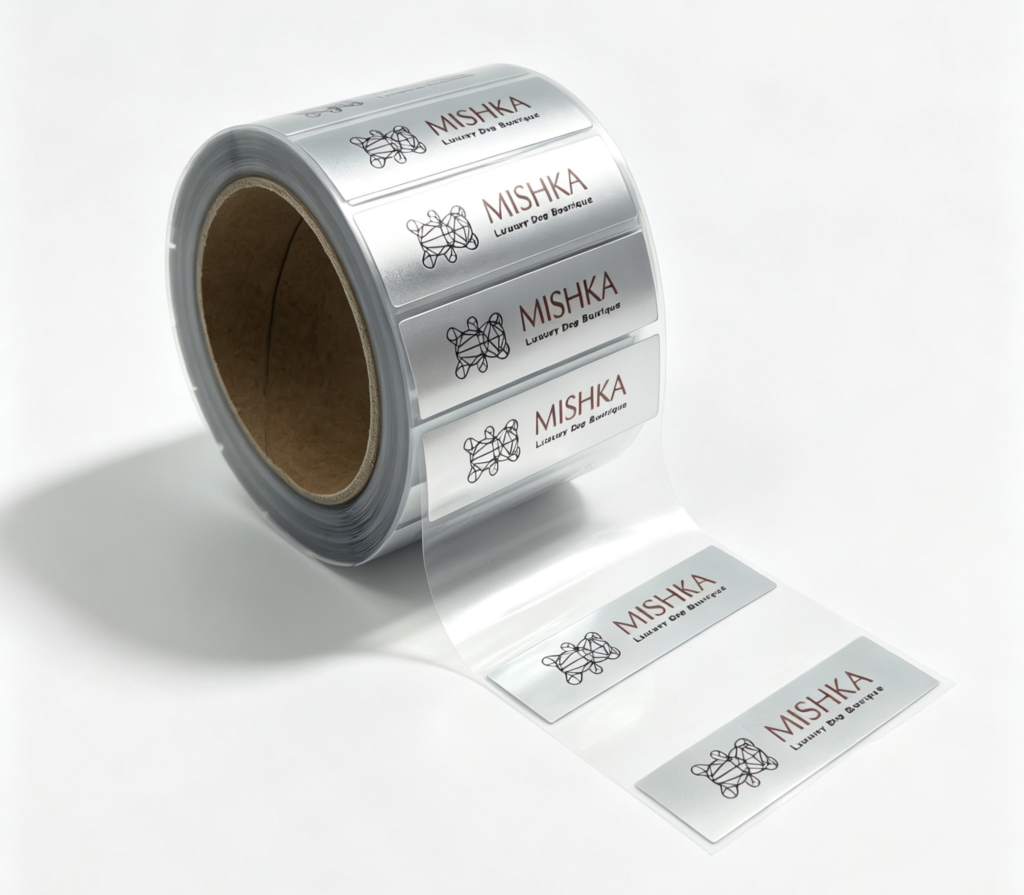
PET Film Liner
PET Film liners are also thin, strong and have a stable dimension.Due to their precision, clean die-cutting and excellent dimension stability, PET film liners are ideal for specific applications.PET films liners have more moisture resistance and are less prone to tearing than paper liners.But they are more expensive than standard paper liners.
What Are Self-Adhesive Labels Used For?
| Industry / Application | Recommended Material Combo | Key Advantages | Typical Label Examples |
|---|---|---|---|
| Food & Beverage | Paper / PP Film + Freezer or Water-Based Adhesive | Moisture/freezer resistance, eco-friendly, vibrant visual appeal | Frozen food packages, wine & beer bottles, squeeze condiment bottles |
| Cosmetics & Personal Care | Clear/Metallic PET or PP Film + Oil-Based Adhesive | Waterproof, oil-proof, high aesthetic value, squeezable durability | Shampoo & lotion bottles, essential oil containers, clear “no-label-look” packaging |
| Pharmaceuticals & Medical | Coated Paper / PET Film + Strong Permanent Adhesive | High scan accuracy, chemical/alcohol resistance, tamper-evident safety | Prescription pill bottles, syringe labels, medical device tracking badges |
| Logistics & Express Shipping | Direct Thermal / Thermal Transfer Paper + Hot Melt Adhesive | High-speed thermal printing, instant strong bond on cardboard boxes, low cost | Waybills, shipping labels, warehouse rack barcodes, pallet tracking tags |
| Chemical & Industrial | Synthetic PET/PVC Film + Solvent Oil-Based Adhesive | Extreme durability against acids, oils, UV rays, and physical abrasion | GHS chemical drum labels, outdoor machinery warnings, automotive engine tags |
| Retail & E-Commerce | Coated Paper / Removable Paper + Water-Based Glue | Cost-effective, easy to peel cleanly without residue, flexible design | Clothing price tags, promotional discount stickers, product seal seals |
How to Choose the Right Self-Adhesive Labels?
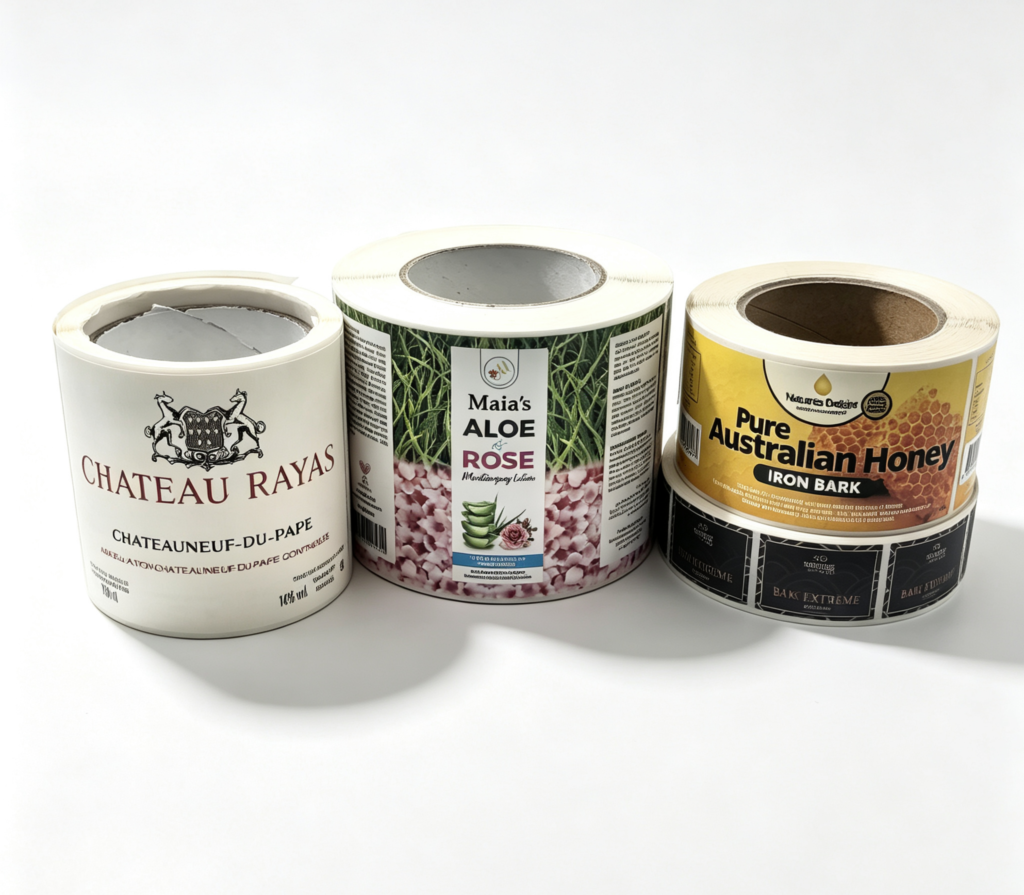
The content below will enable you to find the optimal self-adhesive label by comparing the respective characteristics with the area of application and price.
1.Determine the Face Stock
Indoor & Budget-Friendly: You can choose coated or thermal paper for product labels.Compared to other materials, these two are relatively low in cost. For indoor use, there is no need to worry about the impact of harsh environmental conditions, and they are perfectly adequate for short-term use.
Outdoor & Heavy-Duty: If your label is intended for use in harsh environments such as outdoors or industrial settings, you should choose a membrane label. These offer better resistance to water, oil, tearing, or chemical exposure.
2.Match the Adhesive to the Surface & Bond Type
Standard Packaging: Opt for Water-based Adhesives for stable, everyday bonding.
Low Surface Energy Materials (PP, PE, PVC): Oil-based adhesive are used to obtain a strong grip on plastic surface with low surface energy.
Temporary Use: You can choose removable adhesive for temporary use in order to be able to remove the label again easily without leaving and residue.
Long-term adhesion: For applications requiring labels to remain securely attached to a surface without falling off, permanent adhesive should be selected. Once applied, the adhesive on these labels cures over a short period, making them difficult to remove.
Evaluate the Operating Environment
Cold & Frozen Conditions: Select Freezer Adhesives that retain their bond in sub-zero or condensation-heavy environments.
High-Heat or Chemical Exposure: Pair PET film with Oil-based adhesives for maximum resistance against harsh conditions.
Choose the Right Application Method
Manual labeling: Standard paper or glassine paper backings are both suitable options; both are reasonably priced and offer performance that fully meets the requirements for manual labeling.
High-Speed Automatic Labeling: Use Glassine liners for smooth roll performance, or PET film liners if high tensile strength and precise die-cutting are required to prevent web breaks.
FAQ
What is the difference between paper and synthetic film self-adhesive labels?
Paper face stocks (such as coated paper or thermal paper) are cost-effective, eco-friendly, and ideal for dry, indoor applications like retail and logistics. Synthetic films (such as PET, PP, or PVC) offer superior resistance to water, oil, tear forces, and harsh weather conditions, making them optimal for outdoor, chemical, and cosmetic packaging.
How do I choose between water-based, hot melt, and solvent adhesives?
Water-based adhesives are economical and environmentally friendly for general indoor packaging. Hot melt adhesives provide strong initial tack and fast setting for high-speed labeling operations. Solvent (oil-based) adhesives deliver maximum durability and long-term hold on low surface energy plastics, outdoor equipment, and chemically aggressive environments.
Can self-adhesive labels perform reliably in freezing or cold storage conditions?
Yes, we offer specialized freezer adhesives designed to bond firmly to frozen surfaces, condensation-heavy packaging, and cold-chain containers. These adhesives maintain stable tack in sub-zero temperatures (down to -40°C) without cracking or detachment.
Which release liner should I select: Glassine or PET film liner?
Glassine paper liners are smooth, highly versatile, and cost-effective for both manual application and standard roll dispensing. PET film liners provide exceptional tensile strength, zero tear risk, and high dimensional stability, making them the superior choice for high-speed automatic dispensing and precision die-cutting.
Will removable adhesive labels leave sticky residue upon removal?
No. Our high-grade removable adhesives allow labels to be peeled off or repositioned cleanly from smooth surfaces (such as glass, plastic, or metal) without tearing or leaving unsightly glue residue, making them ideal for temporary promotional tags and peel-and-reseal applications.
Can I order self-adhesive labels on custom roll specifications for machine application?
Yes, we fully customize roll specifications including core outer/inner diameter, maximum roll outer diameter, labels per roll, and precise unwind directions (top-edge first, bottom-edge first, inside/outside wound) to ensure seamless compatibility with your automatic labeling machinery.

Need Help Customizing Your Own Packaging Design?
Whether you need Cosmetic Labels, Wine Labels, Food Labels, or Custom Adhesive Stickers, our experts can recommend the best material based on your product, application, and budget.