
5 Food Label Material Mistakes and How Food Brands Can Avoid Them
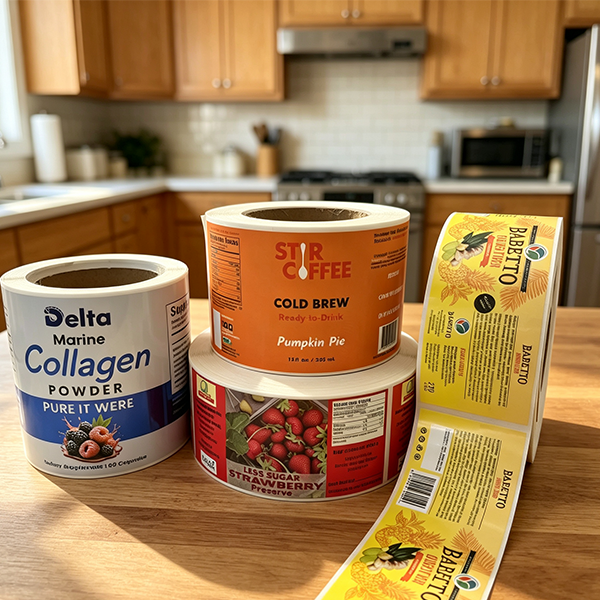
When choosing a labeling material for your food packaging,it’s vital to get it right.Factors like moisture,condensation, extreme temperatures ,oil stains ,abrasion and constant handling of your food packaging labels can affect the label’s performance.If you pick the wrong material will inevitably lead to issues like peeling edges, fading colors, and damaged printing; in the worst case, it may even require replacing the entire batch of food packaging labels.
Therefore, food manufacturers should not only consider appearance and price when choosing labeling materials. The material needs to match the product, packaging surface, storage conditions, and intended usage environment.
In this guide, we will discuss five common mistakes in choosing food labeling materials and help you avoid these errors to prevent unnecessary losses.
- Choosing Paper Labels for Moisture-Prone Food Packaging
- Using the Same Label Material for Refrigerated and Frozen Foods
- Prioritizing Appearance Over Durability
- Common Food Labeling Material Selection Guide
- Choosing Food Label Materials Without Considering the Entire Supply Chain
- FAQ
- Need Help Customizing Your Own Packaging Design?
Choosing Paper Labels for Moisture-Prone Food Packaging
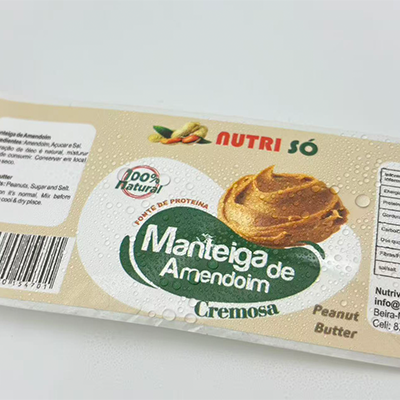
Paper labels are used in food packaging across all industries.They are easy to use,cheap to make and print well.Labels made of paper are not suitable for dry goods that are not stored at room temperature and normal pressure. However, problems arise when paper labels are frequently exposed to water or humid environments.
Why Standard Paper Labels Can Fail
Water absorption by paper labels.Them for wet or fatty foods will soften when coming into contact with water.Also,labels on refrigerated products ,food packaging stored in humid environments,etc. will wrinkle or even get damaged.
For example, when we take a chilled drink out of the refrigerator in the summer and leave it for a while, condensation will form on the bottle. If the paper label comes into contact with this water, it will wrinkle and lose its stickiness after a short time.
This does not mean paper labels are unsuitable for all food products. Instead, the material should be selected based on the actual conditions the product will experience.
Better Alternatives for Moisture-Prone Products
Better water resistance on label is achieved by using better materials,such as BOPP and PET. BOPP labels are printable,waterproof and durable.Due to their features,BOPP labels are especially used for food and beverages packaging.Clear BOPP can create a clean appearance,ideal for brands aiming for a “No-label look” effect.
For even greater durability and weather resistance, PET is a good choice. Conversely, while vinyl is also waterproof, it’s not a top choice for food labels due to the presence of toxic components in its manufacturing process and its environmental impact.
Using the Same Label Material for Refrigerated and Frozen Foods
Why Cold Temperatures Matter
The main reason is that the physical properties of both the “face stock” and the “backing adhesive” change significantly in low-temperature environments.At low temperatures, the adhesive will become like hard plastic.Especially below the “Minimum Labeling Temperature” ,the adhesive looses its fluidity and flexibility.
The frozen adhesive doesn’t get into adequate contact with the object to be pasted (such as cardboard boxes or plastic bottles),resulting in it not sticking properly or falling off as soon as it is touched.As for the face stock, whether it’s a paper label or a film label, it will experience “cold brittleness” at low temperatures.
Refrigerator Labels vs. Freezer Labels
Refrigerated products and frozen products should not automatically use the same label specification.Refrigerated products need to resist condensation and wetting while frozen products need to resist very low temperatures for long periods while being wet.
When selecting labels for frozen food packaging, brands should consider both the face material and the adhesive system.
BOPP and synthetic materials can be suitable options for many cold-chain applications because of their moisture resistance and durability. However, the exact material and adhesive combination should be tested against the actual packaging and storage conditions.
Test Before Full Production
Before placing a large order, I recommend testing the labels.Affix the labels to the actual packaging and place it under the expected refrigerated or frozen conditions. Check that the labels are firmly attached and that the printed surface remains intact. This helps avoid the high costs of relabeling later.
Ignoring Oil, Grease, and Food Exposure
Most foods contain oils, grease, and other food-related substances, which can affect the validity of labels.This is especially for products such as cooking oils, sauces, salad dressings, and marinades. The outer packaging of these products may become stained with oil during normal use.
How Oil Can Affect Food Labels
A lot of labels are printed with water-based inks and pressure-sensitive adhesives.Grease in food can dissolve or even destroy the molecular structure of th adhesive ,making it loose and allow the label edges to peel off or detach completely.
Ordinary labels lack an oil-resistant coating and cannot withstand grease. It quickly penetrates the paper fibers, causing unsightly “oil spots” on the label surface. Oil spots not only affect appearance but can also cause the ink on the label to bleed and become blurred. This can lead to business risks such as being ordered to remove the product from shelves, damaging the company’s image.
Choosing Oil-Resistant Food Labels
For oily products, brands should consider materials and finishes that provide better resistance to oil and grease.Film materials such as PET, PP , and BOPP features natural waterproof, oil-proof, and abrasion-resistant properties.If cost or environmental factors dictate the use of paper,then oil-resistant paper or even glassine paper with a special surface coating can be used.
As for the adhesive backing,using a strong-adhesion acrylic adhesive or a rubber-based adhesive,specially formulated to be grease resistant.This adhesive will provide a long-lasting,strong bond and will not peel or detach in oily environment.
Other way to improve food labels’ oil-resistance is covering the printed label surface with transparent films to prevent moisture and oil based stains from affecting the printed surface.Should oil based stains penetrate the surface of the label,we can easily remove with a wipe.Alternatively, a layer of varnish can be cured with ultraviolet light to form a dense protective film. This also provides waterproof, oil-proof, and scratch-resistant properties, and the cost is usually lower than lamination.
Prioritizing Appearance Over Durability
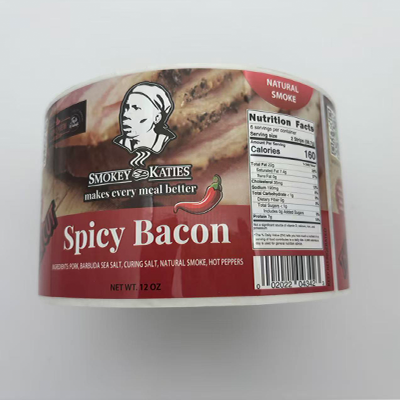
While everyone appreciates attractive and creative labels, which can highlight a product’s strengths and quickly capture consumers’ attention, focusing too much on appearance while neglecting the label’s durability can lead to various problems.
Violating Regulations and Facing Penalties
If food labels show ink fading or damage within their shelf life, making mandatory labeling information such as production dates and ingredient lists illegible, this directly violates FDA and EU regulations requiring labels to be “clear, conspicuous, and durable.”
Products found to be noncompliant during random inspections by regulatory authorities due to faded, blurred, or missing labels.Companies will face penalties ranging from corrective actions and product recalls to fines.
Many companies opt for inferior materials to save a few cents, but the costs incurred later due to customer complaints, returns, and label replacements far exceed the initial investment required to select the right materials.
Damaging Brand Image
On store shelves, labels that are wrinkled, have glue smudges, are faded, or have oil stains can seriously damage a brand’s credibility. No one would buy a product with a tattered, wrinkled label off the shelf—it looks just like an expired or counterfeit product.
If a label is not durable enough to keep the expiration date clearly legible, consumers—especially older adults—may hesitate to purchase the product because they cannot easily find or read the date. In some cases, a faded or damaged date may even raise suspicions of date tampering, potentially damaging the brand’s reputation.
While a beautiful appearance can attract attention, a lack of durability negates that appeal.Today’s young consumers are highly sensitive to labels; clear, well-maintained labels can directly translate into purchases. Conversely, damaged or blurry labels can make people want to throw them away, leading to a decline in both visual appeal and repeat purchase rates.
Common Food Labeling Material Selection Guide
| Material Type | Key Features | Common Food Applications |
|---|---|---|
|
Paper
Coated & Standard Paper Stock
|
|
|
|
BOPP
Biaxially Oriented Polypropylene
|
|
|
|
Clear BOPP
Transparent Film Stock
|
|
|
|
White BOPP
Opaque White Film Stock
|
|
|
|
PET
Polyethylene Terephthalate
|
|
|
|
Synthetic Paper
PP / PE Synthetic Substrate
|
|
|
|
Metallic / Silver PET
Metallized Film Substrate
|
|
|
|
Kraft Paper
Natural Unbleached Paper
|
|
|
Choosing Food Label Materials Without Considering the Entire Supply Chain
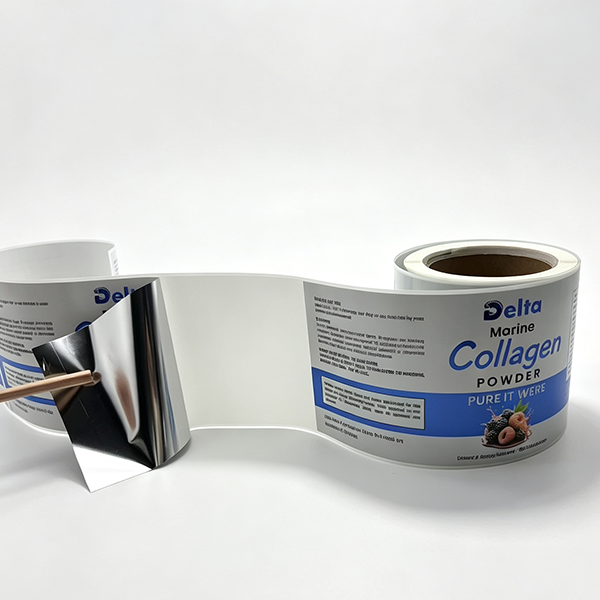
Food labels are more than just labels on packaging.They identify products and contain information about them through the life of a product.So, information on a label is relevant not only during packaging and storage but also during transport,retail display, and consumer use.
Labels Must Perform Throughout the Supply Chain
Throughout the lifecycle of a food label, it is exposed to a variety of conditions that are difficult to predict based solely on the production stage. As mentioned in the previous section, factors such as moisture, low temperatures, and oils must all be taken into account by brand owners when selecting labels.
Label Performance Also Affects Production Efficiency and Compliance
The choice of materials should also take the packaging process itself into account. On automated production lines, label thickness, liner quality, and die-cutting precision must be compatible with the labeling equipment. Poor compatibility can lead to labeling issues such as paper jams, label damage, or production interruptions.
Beyond the manufacturing process, labels must also maintain clear and legible information throughout the product’s lifecycle. Ingredients, expiration dates, barcodes, and traceability information must remain visible and scannable to support food safety compliance and supply chain management.
FAQ

Need Help Customizing Your Own Packaging Design?
Whether you need Cosmetic Labels, Wine Labels, Food Labels, or Custom Adhesive Stickers, our experts can recommend the best material based on your product, application, and budget.