
What would be the best way to arrange the bottle, logo and product information to create the label that you want? Would it be a continuous wrap-around the bottle or separate front-and-back labels?
Both layout options have their own merits. The final decision should be based on a comprehensive assessment of the bottle’s label area, the amount of information to be included, and how much of the bottle’s surface you want to leave exposed.
What Is the Difference Between the Two Label Layouts?
Wrap-around Labels
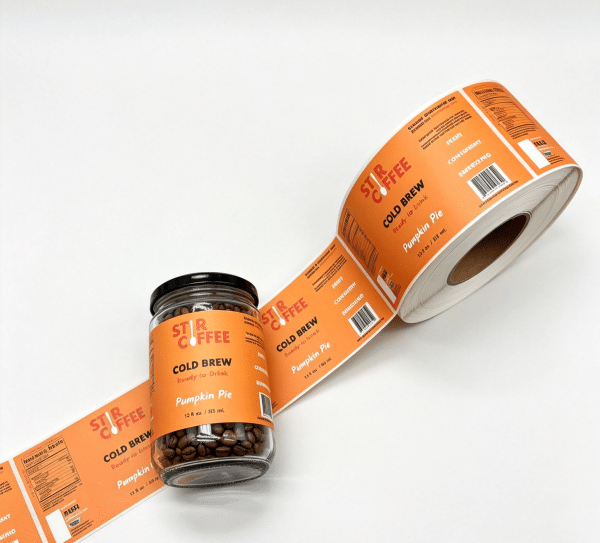
Wrap-around labels can be wrapped around part or all of a container. The most notable feature of this type of label is that it provides a large visual area, offering brands ample space not only to showcase eye-catching visual designs but also to easily accommodate a large amount of strictly regulated information. Ingredient lists and usage instructions for pharmaceuticals and health supplements can be fully displayed while maintaining clear and easy-to-read formatting.
Front-and-back Labels
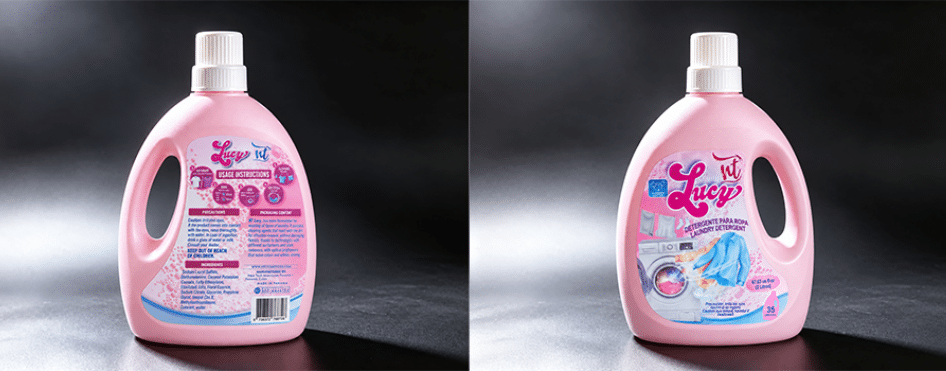
Front-and-back labels, on the other hand, reduce the label’s coverage, leaving ample display space for the container. If the container is transparent then customers can see the product through the blank space left on the label. The front and back of the labels have clear different functions.The front of the label can be used to maximize the visual impact of the brand logo, the product name and the main selling points of the product.The back of the label provides clear functional contrast to the front, providing a clean and simple design to list all the required regulatory information such as the list of ingredients and the barcode. Visually, compared to the fully enveloping wrap-around label, this design conveys a cleaner, more streamlined look.
Which Label Layout Fits Your Bottle Shape?
Of course, the above discussion regarding the selection of these two types of labels assumes that you have already chosen the ideal container. However, if you haven’t yet decided on a container, you’ll need to consider the limitations that labels face when applied to the container.
Adaptability to Container Shapes
Wrap-around labels rely heavily on cylindrical containers. The manufacturing principle behind wrap-around labels involves winding the label around the container’s surface, so cylindrical bottles and cans allow them to perform at their best. As irregularly shaped containers have corners or multiple curved surfaces the above type of label could develop wrinkles when applying or could not stick properly in some areas.
Front-and-back labels offer broader adaptability and are extremely accommodating of various container shapes. They can be applied to round, square or other irregularly shaped bottles. They are printed in two separate labels, which can be applied individually to ensure that they do not wrinkle and stick well to surfaces with corners, convex and concave surfaces etc.The labels can be positioned and applied separately, minimizing the risk of wrinkling or poor adhesion.
Requirements for Container Surface Flatness
Wrap-around labels require the container’s surface to be relatively smooth. The container surface must be free of severe unevenness to ensure the label wraps smoothly without creating air bubbles. However, some beverage bottles are designed with a ring of slight “ridges” in the label area to grip the loose-fitting wrap-around label and prevent it from sliding up or down.
Front-and-back labels can accommodate complex and irregular surfaces. These labels are more flexible in terms of container surface flatness requirements. In addition to completely flat surfaces, they can also adapt well to bottles with a slight taper and even to containers with irregular shapes.
Optimizing Container Materials and Costs
Wrap-around labels reduce the demands on the container’s appearance. Since they cover a large portion of the bottle, brands can use standard containers that are less expensive and do not require high transparency. The label alone can convey the brand’s visual identity and marketing messages, thereby significantly reducing overall packaging costs.
Front-and-back labels, on the other hand, rely more heavily on the container’s own design. These labels are intended to showcase the product, so they require the container itself to have high transparency, a good gloss, or a distinctive shape. Consumers do not focus much attention on the labels themselves, but rather on the container and its contents as seen through the labels.
Which Layout Suits Your Product Presentation?
The examples below offer a starting point. Your bottle shape, artwork, and the amount of information you need to include will help determine the final layout.
| Product & Packaging Goal | Label Layout to Consider | Why It May Work |
| Juice or soda bottles with colorful illustrations | Wrap-around label | Gives fruit illustrations, patterns, and brand colors room to continue around the bottle. |
| Wine bottles with a simple, focused front design | Separate front and back labels | Keeps the brand name and main artwork on the front, with detailed information on the back. |
| Honey jars that showcase the product’s natural color | Smaller front and back labels | Leaves more of the jar visible so customers can see the honey. Clear materials offer another option for either layout. |
| Skincare and shampoo bottles with several variants | Either layout | A consistent design can distinguish scents or formulas through color and text. Choose the layout based on the bottle’s labeling area and content. |
| Perfume bottles with decorative shapes or finishes | Small front label, with a back label if needed | Gives the brand a visible position while keeping much of the bottle’s shape and finish exposed. |
| Supplement bottles with extensive product information | Wrap-around label or a front label with a larger back label | Allows space to organize product details. Check the full-size layout on the bottle before choosing. |
FAQ
What is the difference between wrap-around labels and front and back labels?
Can wrap-around labels be used on square or tapered bottles?
Are wrap-around labels cheaper than separate front and back labels?
Which label layout leaves more of the bottle visible?
Should a wrap-around label overlap or leave a gap?
What should I provide when requesting a custom bottle label quote?

Need Help Customizing Your Own Packaging Design?
Whether you need Cosmetic Labels, Wine Labels, Food Labels, or Custom Adhesive Stickers, our experts can recommend the best material based on your product, application, and budget.