
Permanent vs Removable Adhesive Labels: Which to Choose
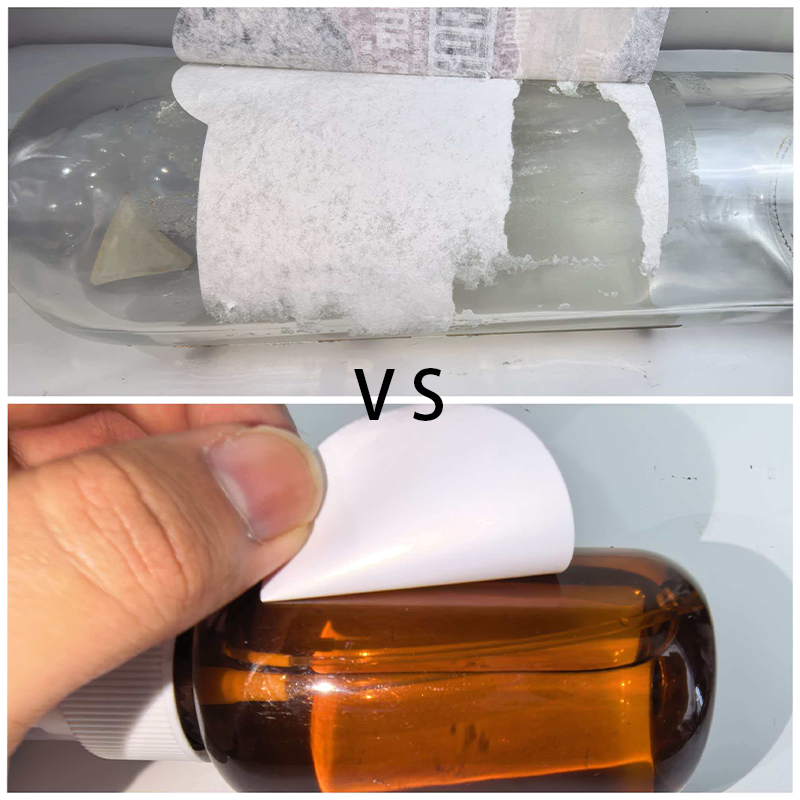
A candle brand I worked with a few years back reordered 40,000 jar labels using the same permanent acrylic construction they’d always used.But this batch of products was moved to a refillable can production line. Customers could have peeled off the label, returned the jar, and refilled it. The result was a jar full of adhesive residue. That mismatch is the permanent vs. removable adhesive labels question in one expensive lesson: the brand ate the cost of a full reprint on removable adhesive.The quality of the labels in this supply chain was absolutely fine, the only mistake was choosing the wrong adhesive. The result is obvious, not only unnecessary costs are incurred, but also an unpleasant experience for customers.
This article will explain what permanent and removable adhesive are and what scenarios they are suitable for.
Permanent Adhesive Labels: Built Not to Move
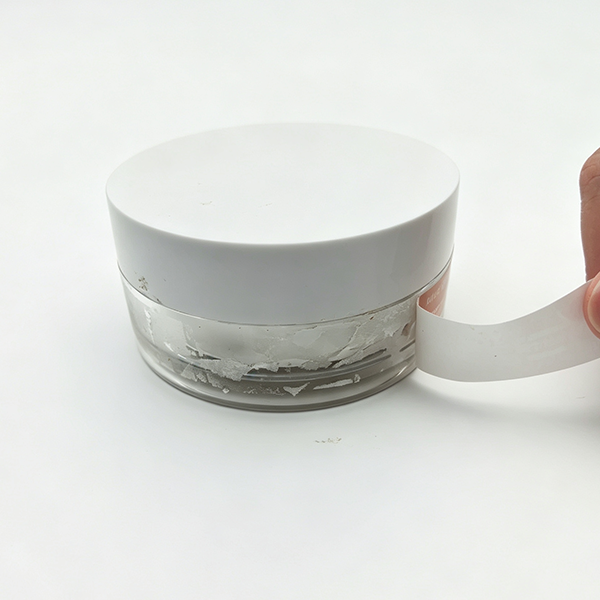
Permanent constructions use a high-tack acrylic that isn’t just sticky on contact — the bond continues to build for 24 to 72 hours after application as the adhesive flows into the microscopic texture of the substrate. That’s why a permanent label peels cleanly the day you apply it but tears the face stock and leaves glue behind a week later.
This is the category for custom permanent adhesive labels on chemical drums where GHS compliance requires the label to survive outdoor storage and handling, FDA-compliant traceability labels on food packaging, equipment nameplates, and fixed-asset tags where the whole point is that nobody can peel it off and swap it.
One detail buyers miss: if the container is PET and it’s going into a municipal recycling stream, a permanent BOPP or paper label can actually contaminate the recycling batch. The Association of Plastic Recyclers (APR) has been pushing wash-off and removable adhesive guidelines specifically because permanent labels don’t separate cleanly during the float-sink process used to sort PET flake. If your packaging is marketed as recyclable, that’s a real conflict to check before you lock in a permanent spec.
Removable Adhesive Labels: Designed to Let Go
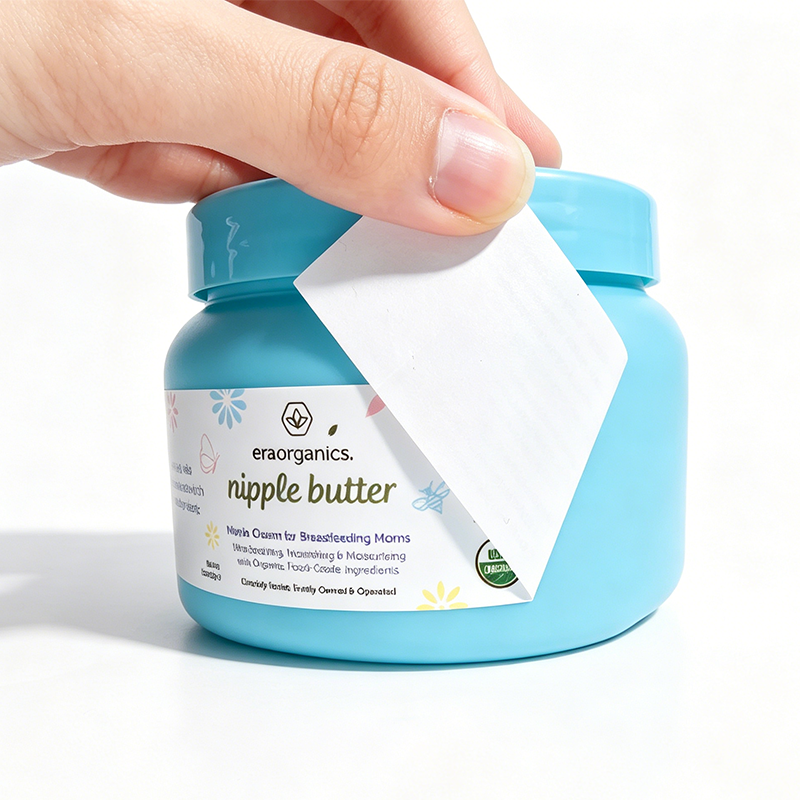
Removable adhesives have lower crosslinking density and lower shear strength, and sometimes even use microsphere acrylic resins instead of continuous films. The purpose is to avoid the adhesion from strengthening over time like permanent adhesives.
That makes it the right call for removable price labels on retail products, removable labels for glass jars in refill or reuse programs, and POS or tester labels in cosmetics. The catch is that heat and UV accelerate cross-linking in almost any acrylic, so a removable label left on a warehouse shelf near a dock door in direct sun will slowly cure into something closer to permanent.It’s just that the adhesion is weaker and there’s more residue, which is a consequence of specifying permanent labels in the first place.
I’ve seen this exact failure on removable shelf labels for warehouse bins: a client used low-tack removable stock on bin locations that got afternoon sun through the dock doors. Within three months the adhesive had cured onto the painted steel shelving, wouldn’t release cleanly, and the reorder went out as hot-melt permanent vinyl instead. Removable adhesives are not the default “safer” option; they are simply more suitable for truly short-term, low-temperature indoor use.
Permanent vs Removable Adhesive Labels
Label Stock & Adhesive Selection Guide
| Application | Recommended Adhesive | Typical Face Stock | Why |
|---|---|---|---|
| Cosmetic / skincare bottles, retail shelf | Permanent (or removable if refill program) | BOPP | Refillable lines need clean removal; single-use lines don’t. |
| Candle jars sold as reusable | Removable | Paper or BOPP | Customers reuse the jar; residue is a return-driver. |
| Chemical drums (GHS labeling) | Permanent, solvent-resistant acrylic | PET or vinyl | Must survive outdoor storage, forklift handling, chemical splash. |
| Food & beverage traceability | Permanent, freezer-grade acrylic | BOPP / PET | Has to hold through cold chain and condensation. |
| Retail price labels | Removable | Paper | Repriced or swapped regularly, no substrate damage allowed. |
| Warehouse bin / shelf labels | Permanent or repositionable poly | Vinyl / BOPP | Low-tack removable fails fast near dock doors and sun exposure. |
| Shipping / packaging seals for small brands | Permanent | BOPP or paper | Tamper evidence and transit durability. |
Real-World Adhesive Failure Modes & Solutions
- Adhesive bleed-out at the label edge: Occurs in warehouses without climate control—the adhesive softens in heat and oozes past the face stock, picking up dust and creating a visible “picture frame” ring.
- Label curling on curved PET or HDPE bottles: Happens when a stiff paper face stock is paired with a tacky adhesive that can’t hold the substrate’s memory. The solution to this problem is simple: choose a softer BOPP material and you won’t need to change the adhesive.
- Automatic labeling line feed errors: Will occur if the release value of the removable adhesive backing is not checked according to the FINAT test method (FTM3). Excessive or insufficient release force can cause the labeler to double-feed or fail to output paper.
A Buyer’s Checklist Before You Order
Review these 6 vital parameters with your label manufacturer to guarantee zero application failures:
-
Application Surface: Glass, PET, HDPE, corrugate, or painted metal (each drastically changes surface energy and required adhesion values).
-
Dwell Time: Days on a retail shelf vs. years on a high-durability industrial asset tag.
-
Environmental Exposure: Indoor, outdoor UV exposure, cold chain freezing, or harsh chemical splash.
-
Removal Requirement: Does it need to come off residue-free, and who removes it (end consumer vs. production line operator)?
-
Application Method: Hand-applied or running through an automated high-speed labeling line (liner release force matters here).
-
Regulatory Compliance: FDA 21 CFR for indirect food contact, GHS for chemical containers, or APR guidelines for recycled packaging.
FAQ
1. How do I determine whether my application requires a permanent or removable adhesive?
2. Will removable adhesives leave a sticky residue on glass or plastic containers?
3. How does surface energy (e.g., HDPE vs. Glass) affect adhesive performance?
4. Can permanent label adhesives withstand cold chain or outdoor UV exposure?
5. What causes “adhesive bleed-out” and how can it be prevented in storage?
6. Why is the FINAT test method (FTM3) crucial for automatic high-speed labeling lines?

Need Help Customizing Your Own Packaging Design?
Whether you need Cosmetic Labels, Wine Labels, Food Labels, or Custom Adhesive Stickers, our experts can recommend the best material based on your product, application, and budget.