
Roll Labels vs. Sheet Labels: Scaling Up Your B2B Packaging Line
When your brand is looking to expand its product line, optimizing your packaging process is a wise choice.As the final step in product packaging, labeling directly impacts production efficiency, brand presentation, and operating costs.
Roll labels and sheet labels as the two most common forms of label supply directly influence subsequent printing, shipping, application methods, and production efficiency.
Many growing companies struggle with inconsistent label output, slow production line speeds, and rising unit costs simply because they continue to use the wrong label format.
This guide details the definitions of roll labels and sheet labels and explains why custom roll labels have become the preferred choice for expanding brands aiming to streamline their large-scale packaging operations.
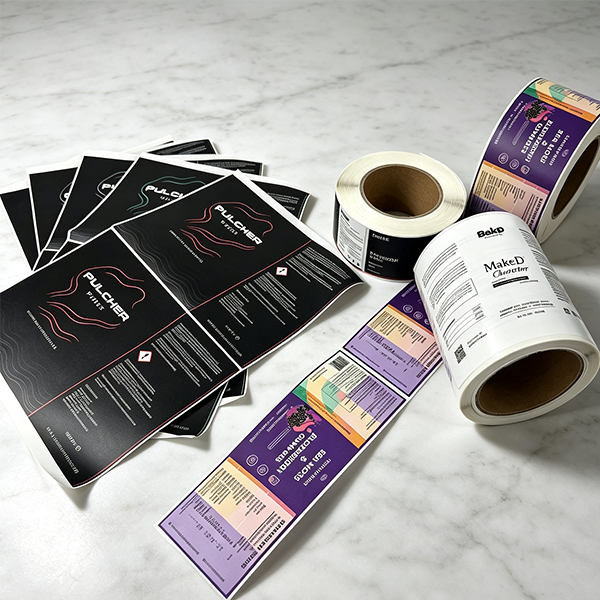
What Are Roll Labels and Sheet Labels?
First, let’s take a brief look at these two approaches so you’ll know how to choose the one that best suits your situation.
The essential distinction lies in scalability and operational automation.For B2B businesses transitioning from small workshops to formal large-scale production, this difference directly determines packaging line productivity.
|
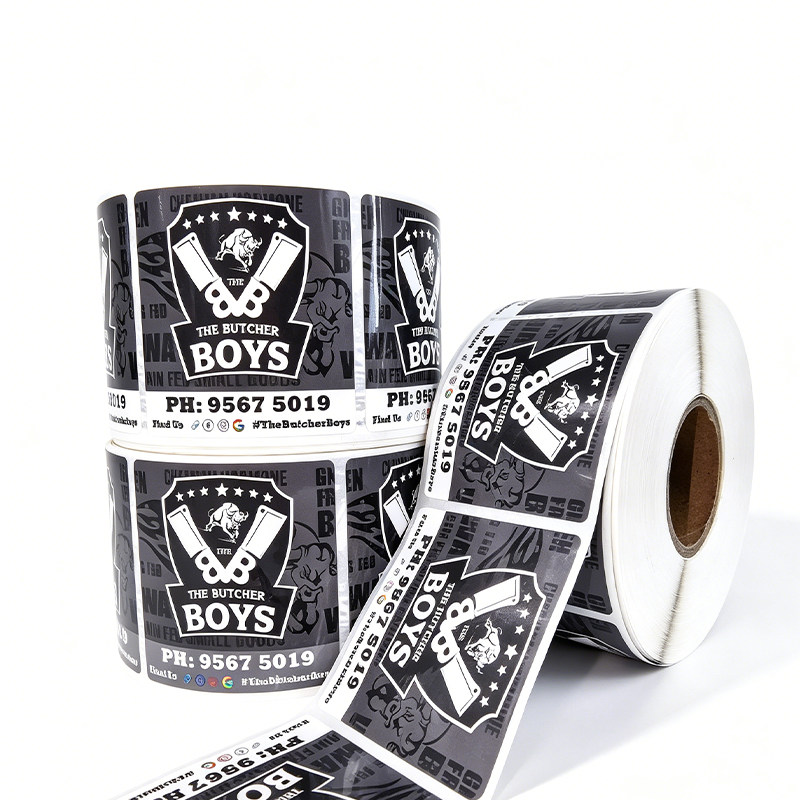
What Are Roll Labels?Roll labels are continuous self-adhesive labels wound tightly around a rigid paper or plastic core, forming a compact roll structure. Arranged in a sequential, spaced layout on a continuous liner, these labels come in customizable sizes, materials, and finishes. Exclusively optimized for automated and semi-automated labeling machines, each label roll can hold hundreds to tens of thousands of individual labels based on size and core specifications. The continuous winding design eliminates frequent material replacement, making roll labels the standard solution for continuous, large-scale commercial packaging operations. |
|
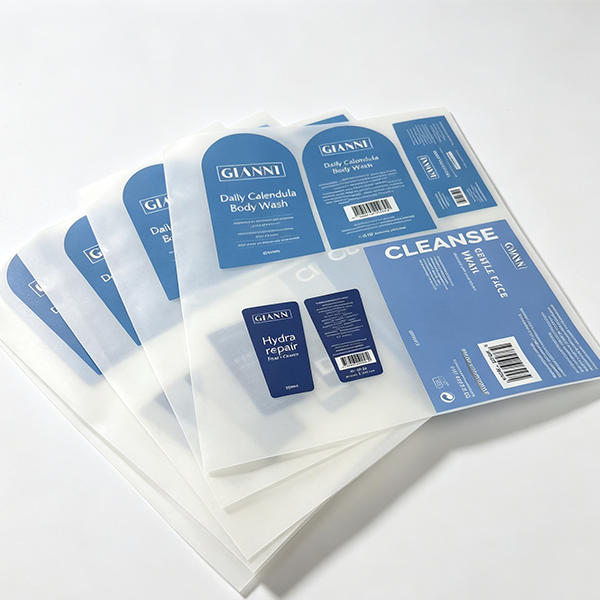
What Are Sheet Labels?Sheet labels are pre-cut labels arranged neatly on standard flat paper sheets, such as A4, SRA3, or 8.5×11-inch formats. Each sheet contains a fixed number of labels in standardized layouts, with multiple shapes and sizes customizable per sheet. Unlike roll labels, sheet labels are discrete, batch-based labeling materials suitable for manual or low-volume semi-automatic use. Sheet labels require manual feeding, sheet-by-sheet printing, and individual peeling before application. They work with common office and small-format digital printers, requiring no professional industrial equipment. |
|
Roll Labels vs. Sheet Labels: Key Differences for Packaging
Why Growing Brands Prefer Custom Roll Labels
Compared to sheet labels, which limit production efficiency and standardization, roll labels offer significant advantages in terms of workflow speed, mass production, and supply chain optimization. They will be a key driver of brand business expansion.
Faster Packaging Workflow
For automated packaging production lines, the most obvious advantage of labels lies in their significant workflow efficiency.
Customized labels are fully compatible with all mainstream automatic labeling machines, dispensers, and integrated packaging production equipment. After simple installation, the machine can automatically complete processes such as feeding, peeling, alignment, and labeling, eliminating the need for continuous manual operation.
This automated workflow completely eliminates the time-consuming manual peeling, sorting, and alignment of sheet labels. It reduces manual labeling errors such as label skew or misalignment, and reallocates human resources to core processes such as quality inspection and order verification.
💡 Efficiency Boost: For semi-automated packaging production lines, labels can increase overall labeling efficiency by 3-5 times. This makes roll labels perfectly suited for growing brands with increasing order volumes.
Better for High-Volume Production
Mass production is an inevitable stage in the scaling up of brand development, and roll label printing is tailor-made for this production scenario. A single roll of labels can hold thousands of labels, avoiding the problems of frequent label paper changes, equipment downtime, and workflow interruptions associated with traditional single-label printing.
This ability to operate continuously completely eliminates production bottlenecks caused by frequent label paper changes.
At the same time, roll-fed label printing supports bulk settings with uniform parameters, ensuring that every label is consistent in color reproduction, dimensional accuracy, and adhesive performance.
This consistent packaging quality is an advantage that cannot be achieved with discrete batches of single-sheet labels.
More Professional Supply Chain
Customized labels effectively enhance the professionalism of the entire packaging supply chain.
In warehousing and transportation, the compact roll structure of customized labels saves significant storage space compared to stacked sheet labels. It also avoids issues such as creases, dust contamination, and damage during stacking and handling.
In inventory management, the standardized specifications of customized labels support standardized packaging across multiple production workshops and product lines. This simplifies quality control processes, reduces material management costs, and meets the stringent packaging standards of large merchants.
Brands can leverage roll labels to build a standardized and scalable supply chain system, laying a solid foundation for long-term bulk cooperation and business expansion.
When Should You Choose Sheet Labels Instead?
Although roll labels are active in high-volume packaging production lines, sheet labels are irreplaceable for specific scenarios. Sheet labels have low customization threshold and flexible mass production, making them the best choice for early small batch packaging.
Suitable for Small Batch and Short-Term Production
For brands launching seasonal products, limited-edition items and low-volume orders, bulk labeling can lead to excess inventory and wasted costs. A single label supports on-demand small batch printing, allowing companies to purchase precise quantities and efficiently control packaging costs.
Adapt to the Diverse Labeling Needs of Multiple SKUs
Many niche brands have dozens of product SKUs with varying label designs, compliance text, and specification information. Sheet labels allow for different custom designs on each sheet, allowing for quick switching between product styles without wasting large amounts of roll label inventory.
Suitable for Start-Up Brands with Limited Budget
The initial purchase cost of automatic roll labeling equipment is relatively high, while sheet labels only require manual labeling and do not require supporting machinery. Emerging companies can use sheet labels to test market packaging effects, reduce early operational risks, and control initial investment costs.
How to Choose the Right Label Format for Your Packaging Line?
Choosing between roll labels and sheet labels requires comprehensive consideration of production scale, equipment status, product attributes, and long-term expansion goals. The following four criteria can help you select the most suitable labeling solution for your packaging production line.
FAQ
Are roll labels only suitable for large-scale production?
No. While roll labels excel in high-volume production, small and medium-sized growing B2B brands can also use small-spec custom roll labels. They support flexible small-batch customized production while reserving scalability for future order growth.
Can custom roll labels achieve the same personalized effects as sheet labels?
Absolutely. Modern roll label printing supports full-color printing, variable data customization, and diverse special processes, covering all personalized effects of sheet labels while ensuring higher batch consistency.
Is equipment upgrade mandatory for using roll labels?
Roll labels match most mainstream automatic and semi-automatic labeling equipment on the market. For brands with manual transitional production, handheld roll label applicators are also available, with low equipment upgrade thresholds.
How do I select the correct roll core size and unwind direction for my labeling machine?
Roll labels are typically produced on 1-inch (25mm) or 3-inch (76mm) standard cardboard cores. We provide standardized unwind direction charts (Top First, Bottom First, Right/Left Edge First) according to your specific automated labeling equipment specifications to ensure 100% smooth feeding without jamming.
What international regulatory compliance standards do your roll labels support for export and sensitive industries?
Our industrial roll label facestocks and adhesives comply with EU REACH, RoHS, FDA (direct/indirect food contact), and FSC certification. Whether applied to cold-chain logistics, hazardous chemical barrels (BS5609), or medical packaging, we provide complete compliance documentation for global supply chain compliance.

Need Help Customizing Your Own Packaging Design?
Whether you need Cosmetic Labels, Wine Labels, Food Labels, or Custom Adhesive Stickers, our experts can recommend the best material based on your product, application, and budget.