
What is Label Facestock? Types, Materials & How to choose
What is facestock?
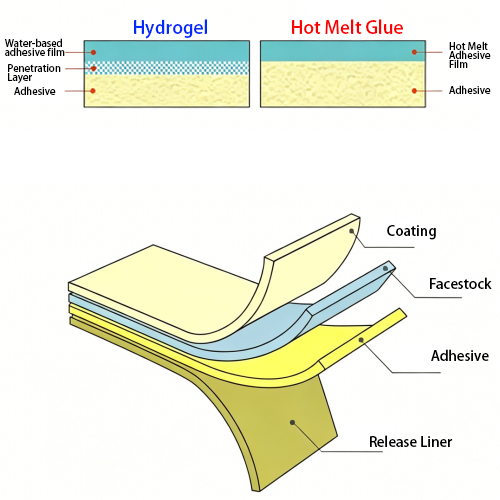
Adhesive label is not just a simple sticker.It is composed of layers of facestock, glue and release liner,like a sandwich.
A label facestock is the topmost, printable layer of a pressure-sensitive label construction. However, some labels will choose to cover the surface with a layer of film in order to achieve some special effects.
It serves as the primary base material for text, barcodes, graphics, and branding, directly determining the label’s ultimate durability, aesthetic appearance, and environmental performance.
But they are roughly divided into two categories – paper and film.
They have their own specials which allows the label to be suitable for different application and meet different needs.
This article will give you a brief introduction and teach you how to identify and select.
| Label Layer | Primary Function | Common Materials Used |
|---|---|---|
| Facestock (Top) | Printable surface for branding & data | Coated Paper, BOPP, PET, Vinyl, Foil |
| Adhesive (Middle) | Bonds the label to the substrate surface | Acrylic-based, Rubber-based, Permanent, Removable |
| Release Liner (Bottom) | Protects adhesive; peeled off before application | Glassine paper, PET film, Kraft paper |
Art Paper Facestock
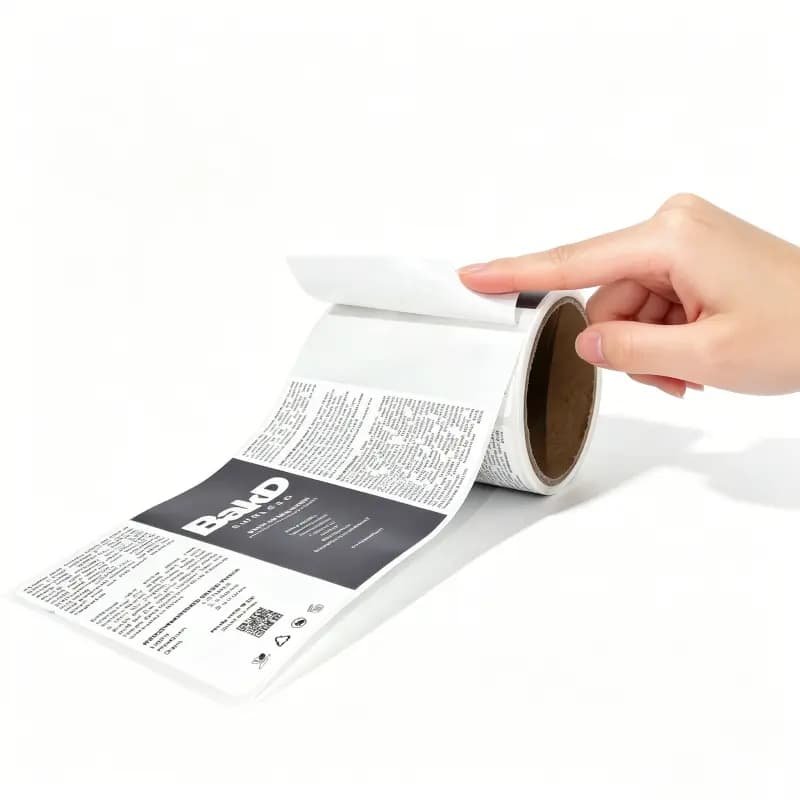
Art paper’s surface has a white paint coating. That makes it smooth and glossyrt paper features a white coated finish, delivering a smooth and compact surface. Art paper features a white coated finish, delivering a smooth and compact surface.Good ink absorption means ink can stick and dry fast.
The printed colors are vibrant and not blurry. The patterns and text presented are very clear. Matte coated paper has weak reflection and more delicate colors. That makes your eyes not tired even if you read for a long time. This kind of paper is quite commonly used in daily life. Wall calendars, picture albums, packaging bags and paper handbags are all made of it.
This type of material has strong printing adaptability and stable performance. It is the mainstream material for commodity labels and is widely used in external packaging label scenarios such as daily chemicals, food, gifts, and daily necessities.
Thermal Paper Facestock
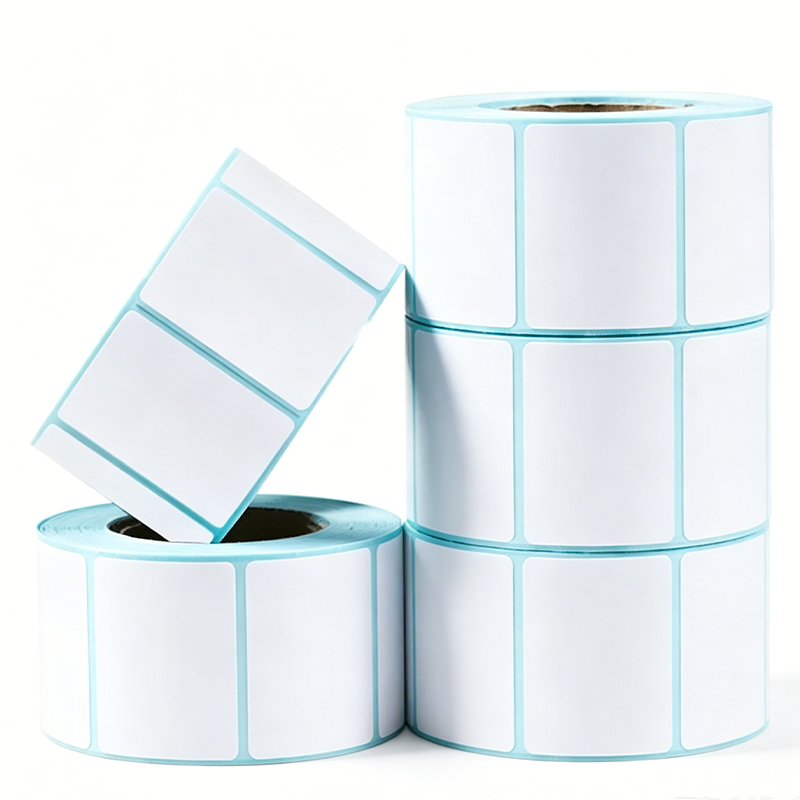
The surface of thermal paper is coated with a “heat-sensitive color-changing layer”. When we print, the color can be developed directly by heating the print head, without the need for a ribbon.
The price of paper is low and does not require the use of ink cartridges, ink, etc., reducing costs. The printing speed is extremely fast, the printing is clear, and it is easy to use. However, the printing on thermal paper is temporary.
Over time or when exposed to high temperature or strong light, the printing will easily fade or even disappear. In addition, thermal paper has a wide range of applicability and can be adapted to a variety of printers, such as barcode printers, cash registers, etc. This kind of paper is used in cashier receipts, milk tea cup stickers(or beverage labels) and express delivery orders that are common in our daily lives.
Aluminum Foil Paper Facestock
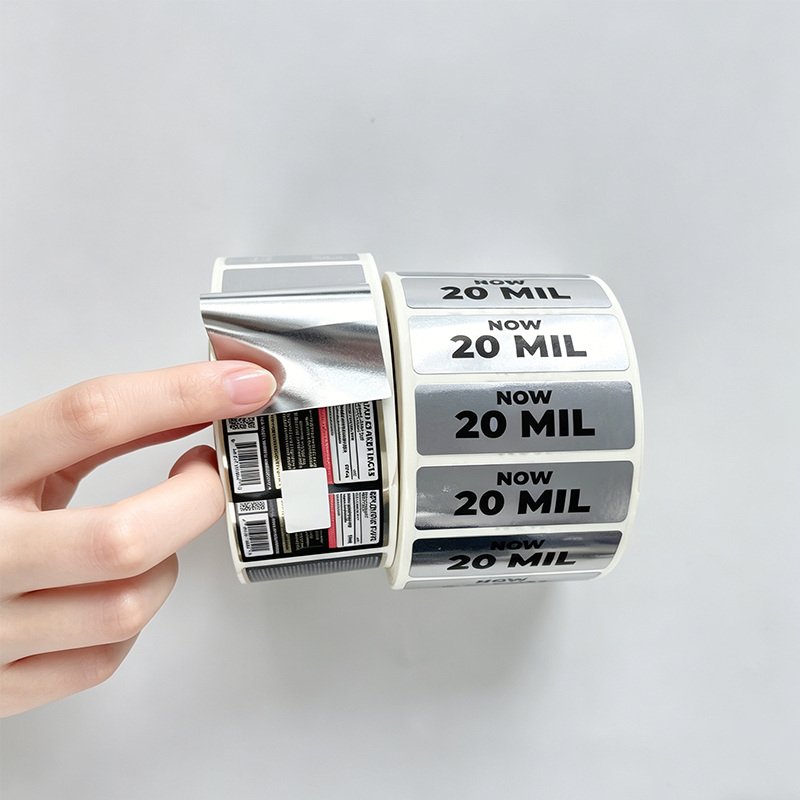
This is a special label material made by combining aluminum foil and paper through an adhesive. The advantages of the two are perfectly combined, not only having a metallic texture.
It can also adapt to a variety of printing methods. The bright metallic luster that comes with it sparkles under the light, which can significantly enhance the quality of the product. Common ones include bright silver foil, matte silver foil, bright gold foil, and matte gold foil. Special processes such as embossing and heat-sensitive temperature change can be customized.
This paper has excellent barrier properties and is moisture-proof, oxidation-proof and light-proof. This can effectively prevent the product from getting damp, oxidized or deteriorating, greatly extending the shelf life.
In daily life, they are often used as food safety labels and makeup labels to enhance the sense of luxury. It has excellent weather resistance, tamper-proof properties and high durability, making it suitable for long-term identification needs in industrial environments. Therefore, it is an ideal choice for industry labels.
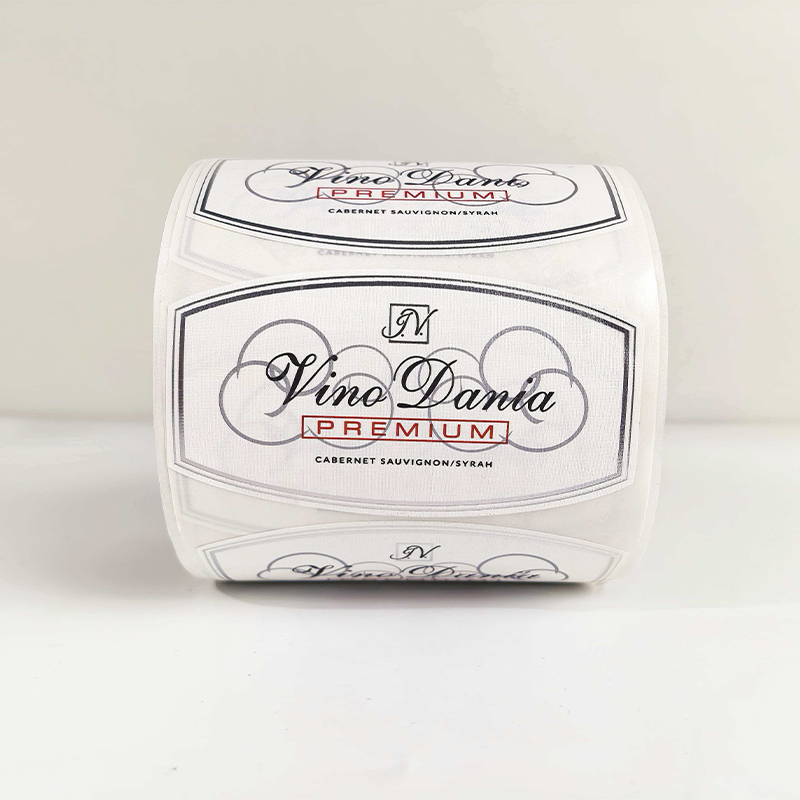
Texture Paper Facestock
Texture paper is a type of specialty paper whose surface features various irregular textures created through methods such as embossing or indenting.
Unlike standard smooth papers or glossy synthetic films, textured paper features rich, natural surface patterns. It is often used as high end products packaging crafted to deliver a sophisticated, hand-crafted aesthetic to product packaging. And it is also combined with hot stamping technology, the label presents a dynamic light and shadow effect.
This unique texture and visual effect is very high-end and can significantly enhance the grade and brand image of the wine bottle. Made of high-tenacity synthetic brushed base material with good ductility and adhesion.
It can be adhered to the surface of various containers such as glass, PVC, and metal, and will not leave any adhesive residue after being removed. High-quality wine-grained stickers can withstand humid conditions, ice or wine spills, and labels won’t curl or peel off.
Ideal for craft wine and beer bottles, organic skincare jars, artisanal honey and olive oil glass containers, and luxury scented candle packaging, these textured labels help create a distinctive, premium presentation for high-end products.
| Facestock Material | Key Characteristics | Primary Application Scenarios | Environment |
|---|---|---|---|
| Art Paper | High-smoothness coated surface, excellent ink absorption, sharp visual clarity, cost-effective. |
RetailLogistics Outer carton labels, product barcode stickers, promotional retail tags, FMCG dry packaging, and indoor pharmaceutical labeling. |
Dry Indoor |
| Thermal Paper | Heat-sensitive chemical coating, fast direct thermal printing without ribbons, short-term durability. |
E-CommerceRetail Express shipping waybills, supermarket weigh-scale labels, takeaway order receipts, ticketing, and temporary warehouse tracking labels. |
Short-Term / Dry |
| Aluminum Foil Paper | Metallic metallic luster, barrier properties against light and moisture, premium metallic aesthetic. |
LuxuryIndustrial High-end liquor & tobacco packaging, gift boxes, anti-counterfeiting seals, luxury tea tins, and decorative appliance branding labels. |
Light & Moisture Barrier |
| Texture Paper | Rich tactile feel, elegant natural pattern (linen/felt/canvas), wet-strength properties, ideal for embossing & hot foil. |
Wine & SpiritsBoutique Craft wine & beer bottles, organic skincare jars, artisanal honey & olive oil glass containers, luxury scented candle packaging. |
Humidity / Glass Containers |
Frequently Asked Questions About Label Facestocks
The choice depends primarily on your product’s exposure to moisture, oil, and physical squeezing. Synthetic paper (like BOPP or Vinyl) is 100% waterproof, tear-resistant, and ideal for squeezable containers like dish soap or shampoo bottles. Paper facestocks (such as Art Paper or Texture Paper) offer a classic, eco-friendly, or luxury tactile aesthetic, making them perfect for dry retail packaging, wine bottles, or boutique food jars.
Yes! Our premium textured paper facestocks are engineered with high wet-strength properties. When paired with our specialized permanent acrylic adhesives, the paper resists dissolving, wrinkling, or edge-lifting even when submerged in ice buckets or exposed to high-humidity refrigeration.
We strongly advise against using standard Art Paper for squeezable chemical bottles like dish soap or laundry detergent. Repeated squeezing causes paper to crease, while soap residue and water can cause the paper fibers to degrade and peel. We recommend waterproof synthetic BOPP or PE films for these applications.
No. Thermal paper features a specialized heat-sensitive chemical layer that produces black images when exposed to the direct thermal printhead. This eliminates the need for ink ribbons, making it a highly cost-effective choice for high-volume shipping, warehousing, and short-term retail labeling.
Aluminum foil paper pairs exceptionally well with selective opaque white printing (to create contrasting matte and metallic zones), embossing, and spot UV coatings. This combination creates high-end metallic highlights and light-barrier visual effects, perfect for luxury tobacco, spirits, and premium gift packaging.
Absolutely. We provide free sample swatches covering our full range of facestocks—including Art Paper, BOPP Synthetic, Aluminum Foil, and Textured Papers. Testing the adhesive strength and surface finish directly on your physical containers ensures 100% compatibility before full production.

Need Help Customizing Your Own Packaging Design?
Whether you need Cosmetic Labels, Wine Labels, Food Labels, or Custom Adhesive Stickers, our experts can recommend the best material based on your product, application, and budget.