
What Is Hot Stamping in Label Printing? Process & Benefits
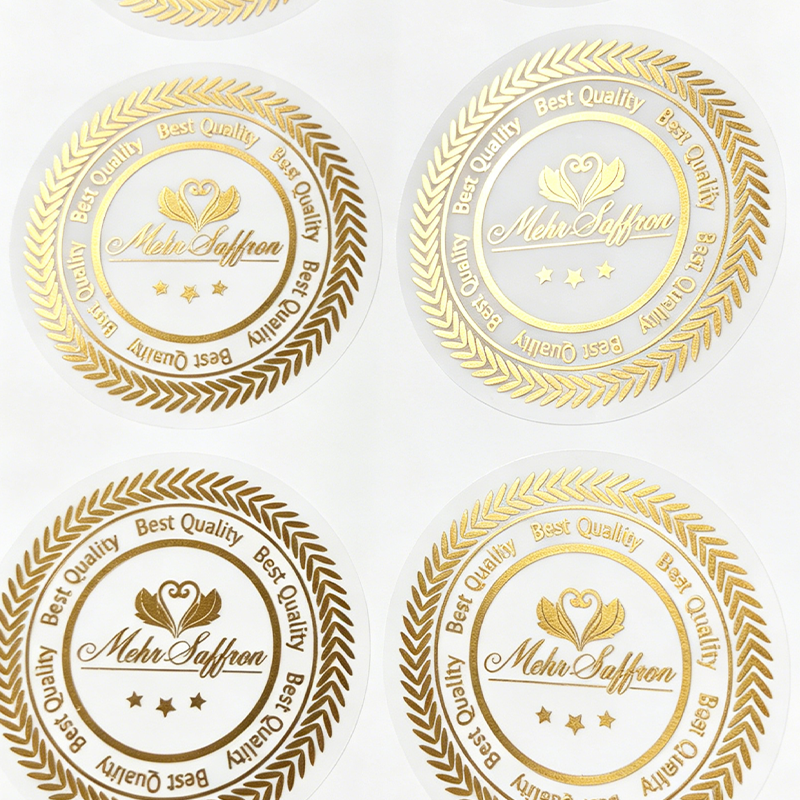
You must have seen metallic luster text, patterns, and logos on the labels or packaging of various products. Most of these beautiful decorative effects come from the hot stamping process. It breaks through the visual limitations of ordinary ink printing. Allowing various label substrates such as paper, plastic, and film to present a high-end, three-dimensional, and exquisite visual texture. It is no longer a simple decoration method, but also a technical support for improving label recognition and added value. Brands seeking luxury label printing solutions will find this classic process that combines traditional printing with modern surface finishing technology.
The Origin of Hot Stamping Process
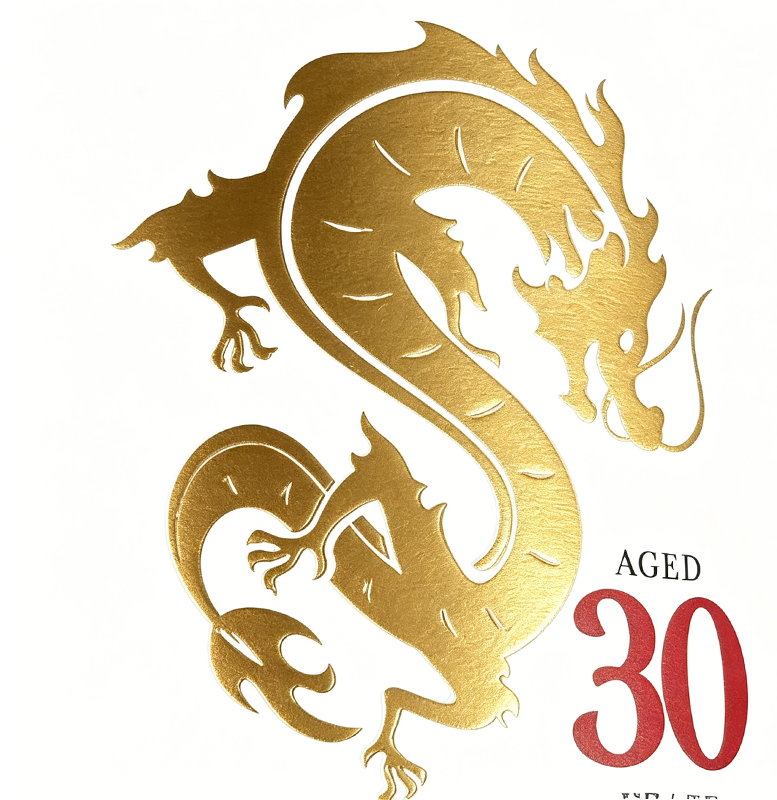
Hot stamping originated from ancient manual techniques used in calligraphy, painting, and palace utensil decoration. In ancient times, craftsmen used beating, baking and pressing to attach natural gold foil to surfaces to decorate text and patterns.
However, traditional handcrafts rely on natural gold foil, which is extremely costly, cumbersome and inefficient. It can only be used for decoration of high-end handicrafts and royal utensils, and cannot be popularized on a large scale
However, traditional handcrafts rely on natural gold foil, which is extremely costly, cumbersome and inefficient. It can only be used for decoration of high-end handicrafts and royal utensils, and cannot be popularized on a large scale
In the mid-to-late 20th century,manufacturers began to widely apply hot stamping to produce various commodity labels. Initially, it was only used for single-point hot stamping of simple text and brand logos, and its function was mainly for basic decoration.
Since the beginning of the 21st century, techniques such as hot stamping, cold stamping, 3D foil stamping, and laser foil stamping have successively matured. It is also suitable for various label substrates, such as paper, PE, transparent film, etc.
Today, the hot stamping process has become one of the standard processes for label printing, and is widely used from high-end luxury labels to daily consumer product labels.
What is Hot Stamping Process?
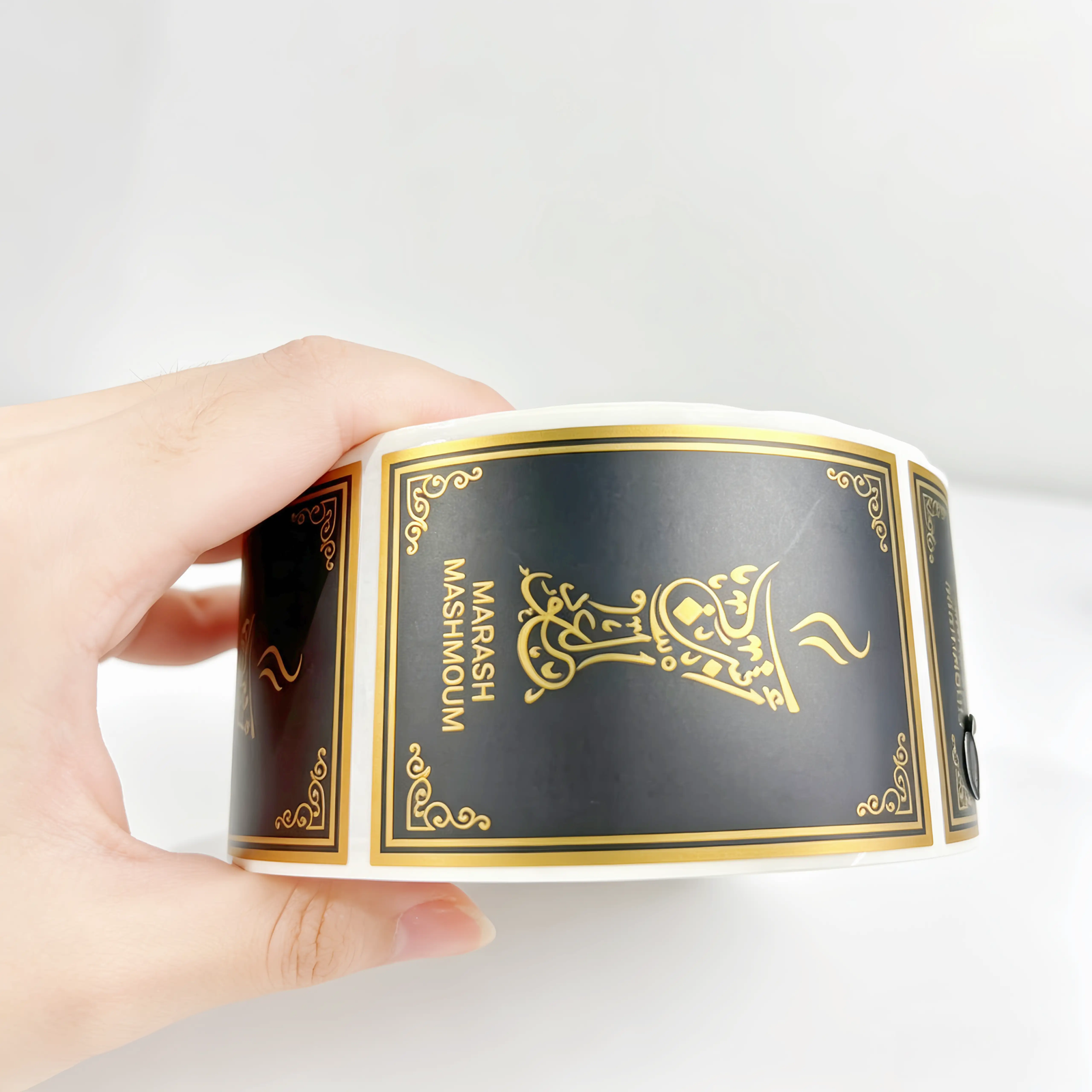
The hot stamping process is a post-printing surface finishing technology that is the core of the label printing industry.
This special printing process **uses hot or cold pressure** from professional equipment to transfer and attach the metallic layer of electrochemical aluminum foil to the label surface.
This process also can custom foil labels to avoid homogeneity. Different visual effects, including silver, red gold, colored gold and laser hot stamping, can be achieved by using different colored electrochemical aluminum foils.
Unlike ordinary ink printing, hot stamping does not require ink mixing and coloring. Relying on the coating properties of anodized aluminum foil to achieve decorative effects, the finished product has a **metallic luster and three-dimensional effect** that is difficult to achieve with ordinary printing.
Depending on the operation method, label hot stamping is mainly divided into two categories: hot hot stamping and cold hot stamping.
Hot stamping is a traditional mainstream process. It heats the metal stamping plate and completes electrochemical aluminum transfer printing under constant temperature and constant pressure conditions.
Hot stamping has high precision, fine texture and good firmness, and is suitable for **high-precision graphic and text label processing**.
Cold foil stamping does not require heating and a special foil stamping plate, and relies on UV glue to bond the anodized aluminum to the substrate. It has fast processing speed and low cost, and is suitable for high-speed production operations of large-area and large-volume labels.
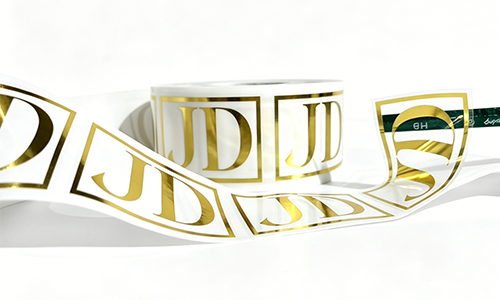
The complete label hot stamping process mainly includes 4 major steps:
Step1: Manufacture a dedicated hot stamping plate based on the design drawings.
Step2: Adjust the equipment parameters including temperature, pressure and running speed.
Step3: Laminate and press the anodized aluminum foil onto the label base material with professional equipment.
Step4: Strip the redundant foil to finish hot stamping molding.
The accuracy of process parameters in the whole procedure directly determines the finished quality of label hot stamping.
The Core Effect and Value That Hot Stamping Brings to Labels
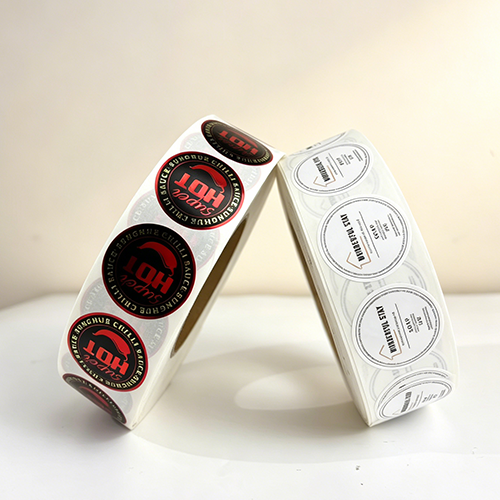
Ordinary labels rely on ink printing, with dull colors and single texture, lacking a sense of hierarchy and luxury.
The metallic mirror luster of the hot stamping process presents a delicate and transparent reflective effect under light, forming a strong visual contrast with ordinary printed color blocks.
Whether it is partially embellished logo, text hot stamping, or large-area overall hot stamping, the label can enhance the overall sophistication.
At the same time, the three-dimensional hot stamping process can make the graphics and text form a slightly raised three-dimensional touch, taking into account both visual and tactile experiences. Greatly improve the texture and aesthetic value of labels, helping products quickly attract consumers’ attention among similar products.

The hot stamping layer has good wear resistance, scratch resistance, acid and alkali resistance, and anti-aging properties, and can effectively protect the label base material and printed graphics.
Inner ink printed with ordinary ink will have problems such as fading, blurring, and falling off due to friction, moisture, and light. The area covered by hot stamping can effectively isolate air, water vapor and external force wear to avoid damage to the label graphics and text.
It is especially suitable for labeling scenarios such as daily chemical care, outdoor signs, and alcohol that are stored for a long time and are prone to friction and moisture. In addition, the hot stamping layer is resistant to high temperatures and does not discolor, making it suitable for the storage and transportation environment of some special products.

In an industry where counterfeit and shoddy products are frequent, label stamping is a low-cost, highly practical anti-counterfeiting method.
Ordinary printing processes are easily copied, while high-precision embossed foil stamping processes have extremely high requirements on the accuracy of the hot stamping plate and the control of the process.
Especially for complex designs often found in luxury label printing, the threshold for imitation is high. Many well-known brands will use custom foil labels with exclusive logos and secret textures to form distinct anti-counterfeiting features.
Consumers can quickly identify authenticity through metallic luster, three-dimensional touch, and graphic accuracy, effectively curbing counterfeit products and protecting brand intellectual property.
| Target Industry | Foil Finishing Technique | Brand Value Enhancement | Key Benefit |
|---|---|---|---|
| Wines & Spirits High-End Beverage | Traditional Hot Foil Stamping, Deep Embossed Foil, Red Gold / Copper Foil. | Creates a classic, heritage metallic texture that stands out on shelf displays and resists ice-bucket condensation exposure. | Premium Perception |
| Cosmetics & Personal Care Daily Chemical | Cold Foil Stamping on Synthetic Film (BOPP/PE), Glossy Silver / Rose Gold Foil. | Protects graphics against soap residue, oil, and continuous bottle squeezing while adding a modern luxury aesthetic. | Durability & Style |
| Gourmet Food & Luxury Goods Boutique Retail | 3D Sculpted Foil Stamping, Metallic Accent Borders, Matte Gold Foil. | Enhances brand identity on organic food jars, tea tins, and gift packaging, instantly capturing consumer attention. | High Shelf Impact |
| Pharmaceuticals & Anti-Counterfeiting Security Packaging | Laser Holographic Foil Stamping, Custom Micro-Text Metallic Seals. | Implements complex metallic patterns that are extremely difficult for counterfeiters to replicate, protecting brand integrity. | Anti-Counterfeiting |
FAQ
Frequently Asked Questions About Hot Stamping Labels
Hot foil stamping uses heat, pressure, and a metal plate to transfer aluminum foil onto the substrate, offering high precision, deep embossing, and exceptional metallic shine. Cold foil stamping relies on UV adhesive without heating, making it faster and more economical for high-volume, large-area printing on flexible films.
Yes! Modern hot and cold foil techniques work seamlessly across various label substrates, including coated paper, clear BOPP films, PE, and synthetic vinyl. This versatility allows brands to create high-end metallic effects on transparent containers and squeeze bottles.
Unlike standard ink that can fade or smudge under friction, the transferred anodized aluminum foil layer forms a protective barrier. It provides excellent resistance to abrasion, moisture, chemicals, and high temperatures, making it ideal for daily chemicals and long-term storage products like wines.
High-precision 3D sculpted foil stamping and holographic laser foil require specialized stamping plates and strict process controls, creating a high technical barrier for counterfeiters. Brands can integrate custom metallic patterns or secret textures to allow easy authenticity verification by consumers.
By using different electrochemical aluminum foils, you can achieve a wide variety of finishes, including glossy silver, red gold, copper, rose gold, colored foil, laser holographic foil, and matte metallic finishes.
The complete process involves 4 key steps: manufacturing a custom metal stamping plate, calibrating machine parameters (temperature, pressure, and speed), pressing/bonding the anodized aluminum foil onto the label substrate, and stripping away excess foil to reveal the clean metallic pattern.

Need Help Customizing Your Own Packaging Design?
Whether you need Cosmetic Labels, Wine Labels, Food Labels, or Custom Adhesive Stickers, our experts can recommend the best material based on your product, application, and budget.